Mold and South Florida Humidity: Why Fort Lauderdale Homes Grow It Faster — and What Mold Remediation in Fort Lauderdale Actually Fixes
BY RESTORATION DOCTOR OF MIAMI · MIAMI-DADE, BROWARD & PALM BEACH
Fort Lauderdale homes grow mold quickly because outdoor dew points sit in the 70s for most of the year, which means the air itself carries enough moisture to wet building materials whenever indoor conditions slip. Once indoor relative humidity holds above roughly 60% for days at a time, mold can colonize drywall paper, wood trim, and the organic film on any surface without a single drop of visible water. The reliable defense is holding indoor RH in the 45–55% band, keeping the AC condensate system clear, avoiding vapor-trapping finishes on exterior block walls, and drying any water event to a verified standard inside 24 to 48 hours. When growth is already established, mold remediation in Fort Lauderdale should follow the ANSI/IICRC S520 standard — containment, negative air with HEPA filtration, removal of colonized porous material, correction of the moisture source, and independent post-remediation verification — not fogging over the problem.
Call (786) 213-9489Why does mold grow so fast in Fort Lauderdale?
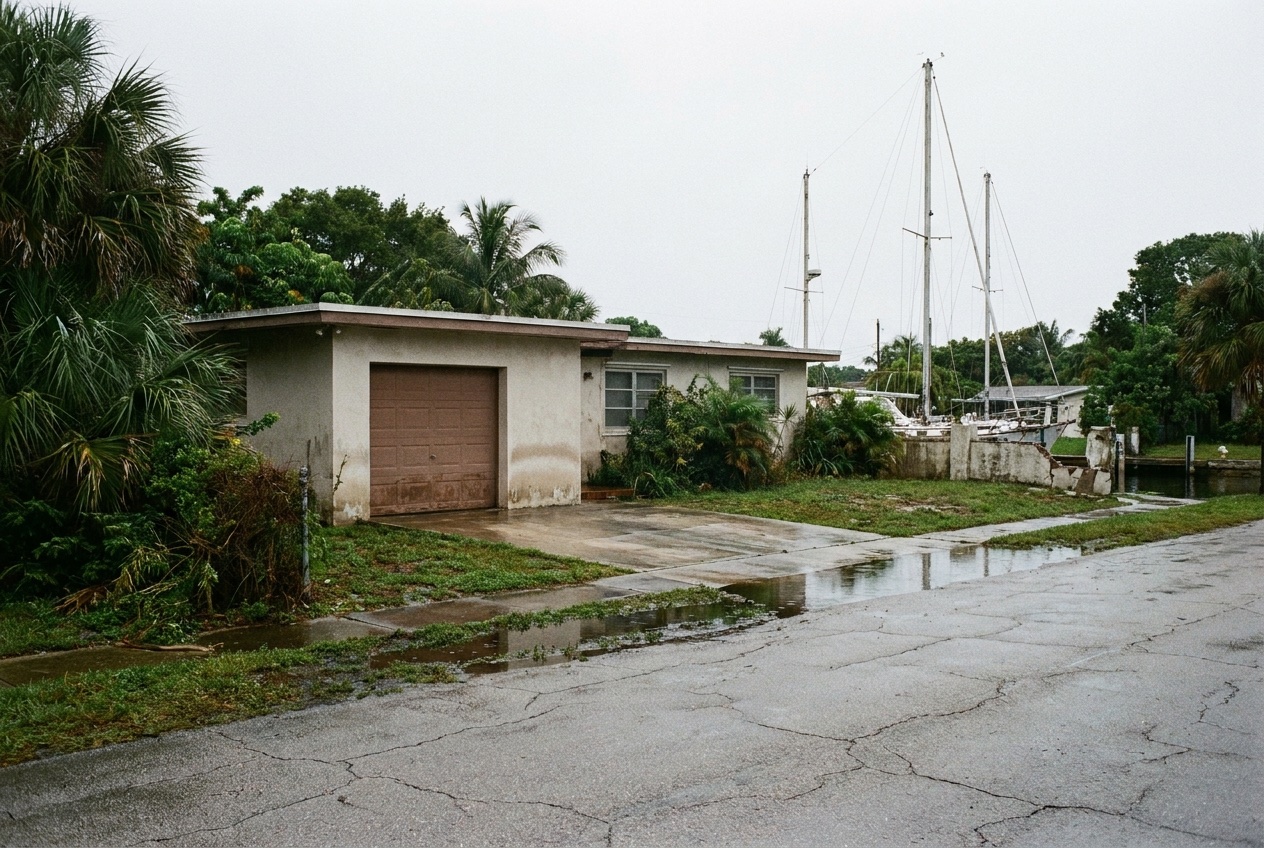
Almost every call we take for mold remediation in Fort Lauderdale starts with the same sentence: "It came out of nowhere." It rarely does. What makes Broward County different from almost anywhere else in the country is not that we get more water — plenty of places get more rain — it is that the air here almost never dries out. Dew point is the number that matters, not relative humidity on the weather app. From roughly May through October, outdoor dew points in Fort Lauderdale routinely sit in the low-to-mid 70s Fahrenheit, and even our so-called dry season rarely delivers the long stretches of genuinely dry air that let a house in a northern climate purge itself of moisture every winter.
A dew point in the 70s means that any surface in your home cooler than that temperature will collect condensation the moment humid air touches it. Supply registers, uninsulated duct boots, the face of an air handler, the interior surface of an exterior block wall behind a bed, the tile floor of a closed guest bathroom — all of these can and do run below dew point. Mold does not need a pipe to break. It needs a surface that stays damp, an organic food source, and temperatures in roughly the 40–100°F range. Fort Lauderdale supplies the second and third ingredients every day of the year, so the entire question becomes whether you control the first.
That constant moisture baseline is also why the clock runs faster here after a real water event. Industry guidance puts the onset of mold growth on wet organic materials at roughly 24 to 48 hours. In a dry climate, that is the outer edge of the range. In a Fort Lauderdale home in August, with ambient air already saturated and interior temperatures in the seventies, it is the inner edge. The grace period that homeowners elsewhere take for granted simply does not exist here.
What indoor humidity level actually prevents mold?
The target we work toward in South Florida homes is indoor relative humidity somewhere in the 45 to 55 percent band, measured with an inexpensive hygrometer placed at living-space height rather than on a windowsill in the sun. That band is not arbitrary. Below about 40 percent, homes in our climate tend to require an unreasonable amount of mechanical effort and can dry out wood floors and cabinetry. Above about 60 percent sustained, the equilibrium moisture content of drywall paper, wood, and settled dust climbs to a level that supports fungal growth without any liquid water at all.
The word that does the work in that last sentence is sustained. A short spike to 65 percent when you open the sliders to bring groceries in is meaningless. Three weeks at 65 percent in a closed-up guest room is a colonization event. Mold responds to duration far more than to peaks, which is why the homes that surprise their owners are usually the quiet ones — the seasonal condo, the spare bedroom nobody opens, the walk-in closet on the east wall of the house.
One more caution specific to our market: buy a hygrometer, and buy a second one. Cheap sensors drift, and a unit reading 8 points low will let you sit at 63 percent while believing you are at 55. Two readings that agree are worth far more than one you trust blindly.
- Target 45–55% indoor RH year-round, measured at living-space height.
- Treat sustained readings above 60% as an active mold risk, not a comfort complaint.
- Measure in the rooms you do not use — closed guest rooms and closets run highest.
- Verify with two hygrometers; single cheap sensors drift badly over a year.
- Watch the shoulder months too: October evenings in Broward are often more humid indoors than August, because the AC runs less.
| Sustained indoor RH | What it means | What to do |
|---|---|---|
| Below 40% | Drier than necessary here; can stress wood floors, doors, and cabinetry | Ease off supplemental dehumidification |
| 45–55% | Target band — mold growth is not supported on normal building materials | Maintain and verify monthly |
| 56–59% | Drift zone; usually a sign the AC is short-cycling or a room is closed off | Investigate airflow, run time, and closed doors |
| 60–69% sustained | Danger zone — surface mold can establish on drywall paper, trim, leather, and fabric | Add dehumidification and find the moisture source now |
| 70%+ sustained | Colonization is likely somewhere in the house, usually out of sight | Have the home assessed; expect hidden growth |
Why does a bigger air conditioner make a moldier house?
This is the single most counterintuitive thing about building science in South Florida, and it is behind an enormous share of the mold problems we see. An air conditioner removes humidity only while the coil is cold and air is moving across it. Moisture condenses on that coil over time — which means run time, not raw capacity, is what dehumidifies a house.
An oversized system hits the thermostat setpoint fast and shuts off. The coil never gets cold enough for long enough to wring meaningful moisture out of the air, and the moisture that did condense on the coil re-evaporates back into the ducts when the blower coasts after shutdown. The homeowner gets exactly what they asked for — a cold house — and exactly what they did not ask for: a cold, clammy house sitting at 62 percent RH with condensation forming on register faces. Short-cycling also punishes the equipment, but the mold consequence is the one that shows up in the drywall.
The fix is rarely "turn it down further." Dropping the setpoint on an oversized system just makes the cycles shorter. What actually helps is a correctly sized system with a variable-speed or two-stage blower that runs long, low, and steady; a properly commissioned setup that is not overventilating outdoor air into the house; and, in many Fort Lauderdale homes, a dedicated whole-home dehumidifier that handles latent load independently of temperature. That last piece is what lets you hold 50 percent RH at 76°F instead of chasing humidity with cold air.
- Cold and dry are different jobs; only run time does the drying.
- Oversized equipment short-cycles, then re-evaporates coil moisture back into the ducts.
- Two-stage or variable-speed blowers dehumidify far better than single-stage at the same tonnage.
- A dedicated dehumidifier decouples humidity control from temperature — the most reliable fix for a chronically damp Fort Lauderdale house.
- If the registers sweat, the system is producing humidity problems, not solving them.
Is the AC condensate drain really one of the most common hidden mold sources?
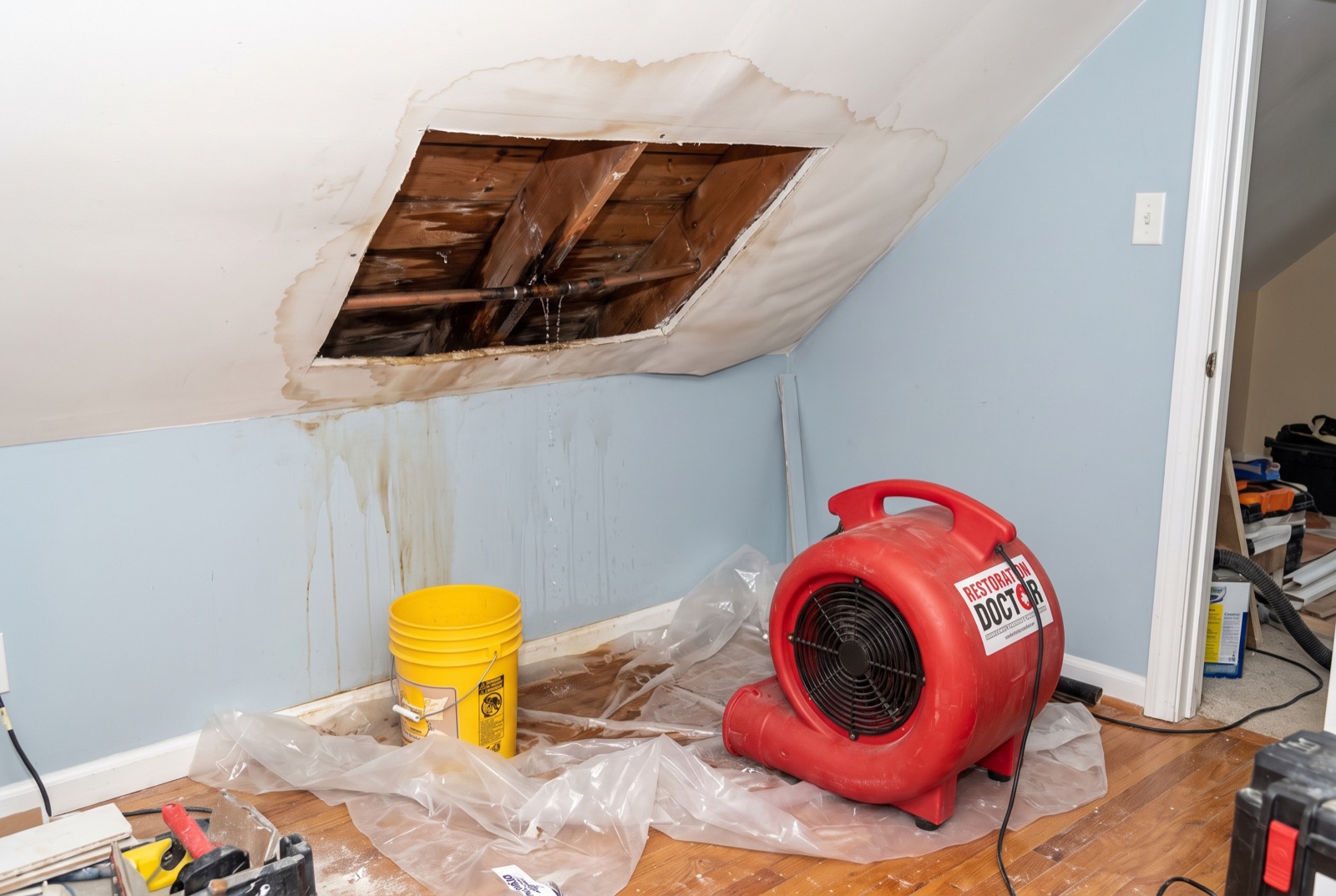
Yes — and it is the one we find most often when a homeowner swears there was never a leak. The condensate pan under your evaporator coil collects water continuously in this climate, sometimes gallons a day. That water is warm, it sits in the dark, and it flows through a drain line surrounded by humid air. Algae and biofilm colonize the line, the slime thickens, and eventually the drain stops draining. The pan overflows, or the float switch trips and the system shuts down, or — worst case — the water backs up quietly into the air handler closet, the wall behind it, and the flooring beyond.
What makes this failure so damaging is that it is slow and hidden. A supply-line break announces itself; a condensate overflow drips into a wall cavity behind a closet door for weeks. By the time the musty odor reaches the hallway, the drywall paper, the base of the studs, and often the underside of the flooring have all been damp for a long time. This is a textbook case of the 24-to-48-hour window being missed by a factor of a hundred.
Prevention here is genuinely cheap. Have the drain line cleared during routine service, keep a float safety switch installed and functioning, confirm the pan has proper pitch and no rust-through, and if your air handler sits in an interior closet, look at the floor around it every month or two. Wet baseboards or a slightly cupped plank on the adjacent side of that wall is the earliest warning you will get.
- Clear the condensate line on a schedule — warm, humid air makes biofilm fast here.
- Confirm a working float switch; it turns a flood into an inconvenience.
- Inspect the secondary pan for rust-through and standing water.
- Insulate supply plenums and duct boots properly — bare metal below dew point sweats.
- Check the flooring and baseboards on the far side of the air-handler closet wall, not just inside it.
Why does vinyl wallpaper or the wrong paint on a block wall cause mold in Florida?
Most Fort Lauderdale homes and low-rise condos are concrete block with a stucco exterior and furred-out interior walls. Concrete block is not waterproof — it absorbs and holds moisture, and stucco is designed to shed bulk water while remaining somewhat permeable. In a hot, humid climate the vapor drive runs inward for most of the year: moisture moves from the hot, wet outdoor air through the wall assembly toward the cooler, air-conditioned interior. That is normal, and it is fine as long as the moisture can keep moving and dry to the inside.
Vinyl wallpaper stops it cold. So do impermeable elastomeric coatings applied to the interior face, heavy oil-based systems, and vinyl-faced insulation board installed with the vapor barrier on the wrong side. What happens next is predictable: inward-driving vapor reaches the back of that impermeable layer, hits a surface that is below dew point because the room behind it is air conditioned, and condenses. The moisture has nowhere to go. The paper backing of the wallpaper, the adhesive, and the drywall paper behind it are all excellent food. Growth spreads across the back of the finish, invisible, sometimes for years, until someone peels a corner.
The practical rule for Florida walls: let them dry inward. Use vapor-permeable interior finishes on exterior masonry walls. Skip vinyl wallpaper entirely on any exterior wall. If a coating is going on the outside of the building, make sure it is appropriate for stucco over block and is not simply sealing moisture into the assembly. And never apply an interior vapor barrier to an exterior wall in this climate on the assumption that what works in a cold climate works here — the vapor drive runs the other direction.
- Vapor drive in South Florida runs predominantly inward — walls need to dry to the interior.
- Vinyl wallpaper on an exterior block wall is a mold assembly waiting for a cold enough room.
- Impermeable interior coatings and vinyl-faced board with a mis-oriented barrier do the same thing.
- Furring cavities against block hold moisture and stay dark — a bad combination.
- Cold-climate detailing applied in Broward reliably produces hidden growth.
What about slab moisture under vinyl plank and tile?
Slab-on-grade construction is the norm here, and the ground under a Broward slab is wet. Water vapor moves continuously upward out of the slab. Older homes frequently have no vapor retarder under the slab at all, or one that was punctured during construction. In a house with breathable flooring, that vapor simply passes through and gets removed by the AC. Cover the slab with an impermeable luxury vinyl plank, a sheet vinyl, or a tightly grouted tile field with a non-breathable membrane, and the moisture accumulates at the interface instead.
The symptoms are familiar: adhesive that turns to paste and releases, planks that cup or telegraph, tile that goes hollow-sounding, a persistent musty smell near the floor that intensifies when you close the room up. Growth develops on the adhesive, the underlayment, and any organic residue trapped at that interface, and it is fully hidden until the floor comes up.
The right sequence before any new floor goes down over a Fort Lauderdale slab is to test slab moisture — relative humidity in-situ probes or calcium chloride testing per the flooring manufacturer's requirement — and then respect the number. If the slab exceeds the manufacturer's limit, a moisture mitigation system or a genuinely breathable assembly is not an upgrade, it is the whole job. Installing over a wet slab because the schedule says so is how a floor becomes a remediation project two years later.
Why do closed-up snowbird condos and seasonal homes grow mold every summer?
This is the most preventable mold problem in Broward County, and we see it every single year. The owner leaves in April, sets the thermostat to 78 or 80 to save on electricity, closes the hurricane shutters, and flies north. For five months the AC barely runs. Because run time is what dehumidifies, the interior slowly climbs into the sixties and seventies for relative humidity and simply stays there. Leather furniture, closet walls, the back of upholstered headboards, and the drywall behind pictures on exterior walls all go fuzzy. Nobody is there to smell it.
Setting the thermostat high is precisely the wrong lever. What an unoccupied Fort Lauderdale home needs is humidity control, not temperature control. The most reliable approach is a dedicated dehumidifier — either a whole-home unit ducted into the system or a properly drained portable in the central living area — set to hold roughly 50 to 55 percent while you are away. A humidistat-driven or humidity-sensing thermostat that will call for cooling based on moisture rather than temperature alone is the next best option. Either way, add a remote-monitoring sensor so you can see the number from wherever you are, and give a neighbor or a property manager a standing instruction to walk the unit monthly and look at the air handler closet.
Coastal exposure adds to the load. Homes near the Intracoastal and along the beach take constant salt-laden air, which is corrosive to condenser coils, fasteners, and equipment casings, and which loads windows and screens with hygroscopic salt deposits that hold moisture. Salt does not feed mold directly — it is not organic — but corroded equipment fails sooner, and failed equipment means an unconditioned house.
- Never leave a Broward home at 78–80°F with no dehumidification and expect it to stay dry.
- Control humidity directly: a dehumidifier set to 50–55% beats any thermostat strategy.
- Install remote humidity monitoring — a $40 sensor prevents five-figure problems.
- Have someone physically walk the property monthly, including the air-handler closet.
- Coastal salt accelerates equipment corrosion; service condensers near the water more often.
What is the honest difference between cleaning mold and IICRC S520 remediation?
Wiping visible growth off a hard, non-porous surface — a shower frame, a window stool, a section of tile — is cleaning. If the area is small, isolated, and on a material that mold cannot root into, careful cleaning by a homeowner can be appropriate. That is where the honest scope of DIY ends.
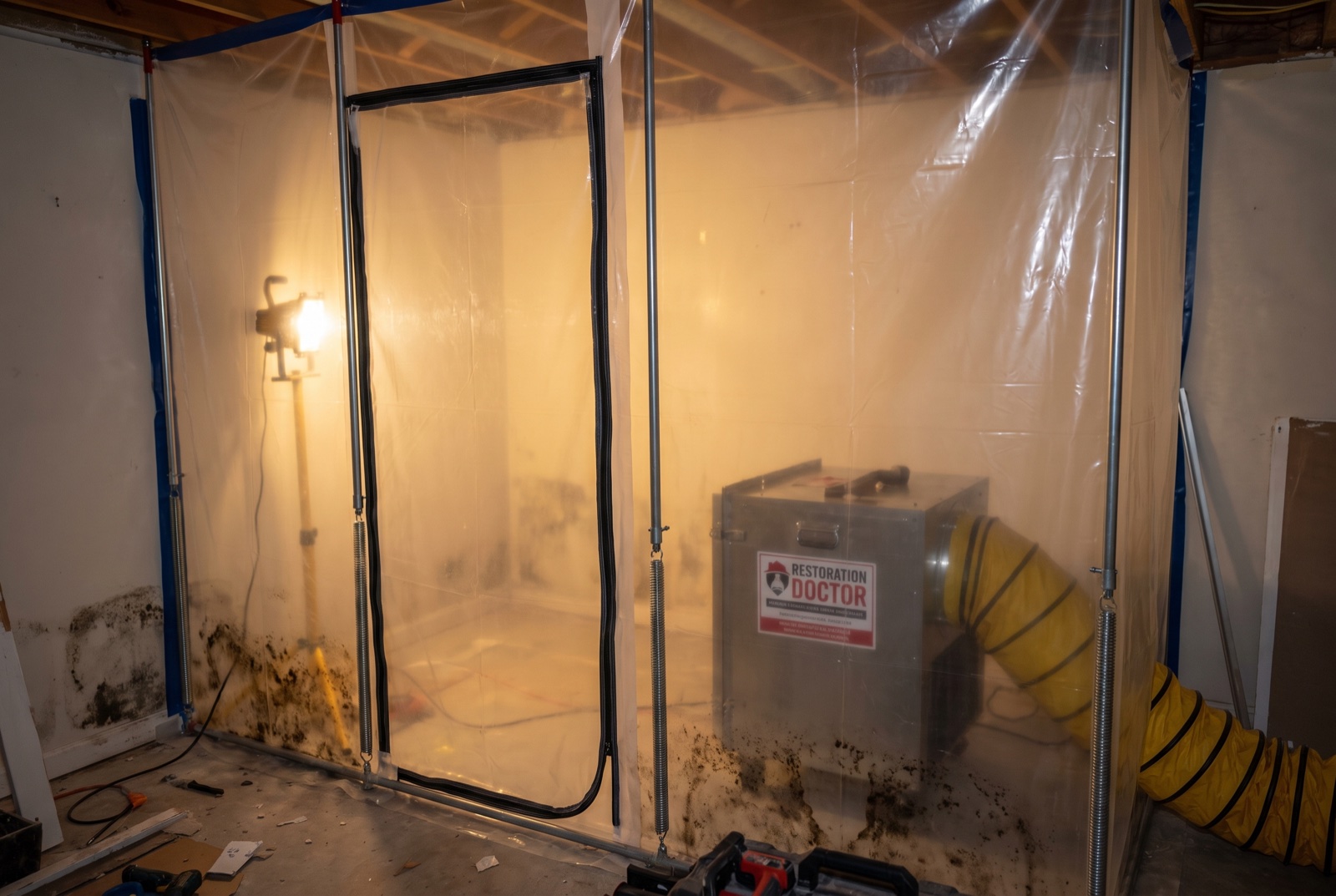
Remediation is a different activity with a different goal: returning the building to a normal fungal ecology and removing the contamination rather than relocating it. The ANSI/IICRC S520 standard is the reference professionals work to, and the sequence matters more than any single product. Containment is erected so the work area is physically separated from the rest of the home. Negative air pressure is established with HEPA-filtered air scrubbers so that any air leaving the containment is filtered and airborne spores are not driven into clean space. Engineering controls and appropriate personal protective equipment protect the crew and the occupants. Porous materials that are colonized — drywall, insulation, carpet pad, some wood products — are removed and bagged out, because you cannot reliably clean a material that mold has grown into. Remaining surfaces are HEPA-vacuumed and detail-cleaned. The moisture source is corrected, because remediation without moisture correction is a scheduled repeat. And then the area is dried and verified before the containment comes down.
That last step deserves emphasis. Post-remediation verification should be performed by an independent indoor environmental professional — someone who did not do the removal work and has no interest in the result. Florida licenses mold assessors and mold remediators separately and, as a general matter, restricts the same firm from both assessing and remediating the same project. That separation exists for good reason: the party that grades the work should not be the party that performed it. When a company offers to test your home, remediate it, and then clear its own work, that is the structure you should question.
- Cleaning = surface removal on hard, non-porous materials in a small isolated area.
- Remediation = containment, negative air with HEPA, controlled removal, detail cleaning, moisture correction, verification.
- Colonized porous materials get removed, not scrubbed.
- The moisture source is part of the scope, not a follow-up suggestion.
- Post-remediation verification belongs to an independent assessor — not the remediator.
Why does mold testing tell you less than you think — and why does fogging fail?
Homeowners often want to start with an air sample, and it is an understandable instinct. But an air test is a snapshot of a moving target. Spore counts shift with the weather, with whether a door was opened, with whether the AC was running, and with what happened in the room an hour earlier. There is no federal or Florida numeric standard defining a "safe" spore count, so results are interpreted comparatively against an outdoor control — which in Fort Lauderdale is itself a spore-rich sample. A test can confirm that something is wrong and can be genuinely useful for post-remediation verification and for defining scope, but it cannot tell you where the growth is or why the building is wet. Finding the moisture is the diagnostic act. A moisture meter, a thermal camera, and a person willing to open an access panel answer more questions than a spore trap.
Species identification is similarly oversold in marketing. It is reasonable to know generally what is present, but the practical response to established indoor growth does not change much by genus, and the sensational "toxic mold" framing is not how remediation decisions get made. What matters is that there is active growth on materials in an occupied building, that people are being exposed to it, and that it needs to be removed and the water stopped.
Which brings us to fogging and encapsulation. Spraying a biocide or an antimicrobial fog through a house with active growth and an uncorrected moisture source does not remediate anything. Dead mold is still allergenic — the fragments and proteins that provoke reactions do not stop being what they are because the organism was killed. The material is still colonized, the staining is still there, and the water is still arriving. Encapsulant painted over growth on a wet wall hides it for a season. We treat fogging as an ancillary step at most, never a substitute for physical removal and moisture correction. If a proposal leads with fogging and does not include containment, source correction, and independent verification, it is not remediation.
How does mold affect health, and when should I call a doctor?
We are a restoration contractor, not a medical provider, and we are careful about that line. What is well established is that indoor mold exposure is commonly associated with upper-respiratory symptoms — nasal congestion, coughing, throat and eye irritation, sneezing — and with worsening symptoms in people who have asthma or existing allergies. Some people are considerably more sensitive than others, including infants, older adults, and anyone who is immunocompromised or undergoing treatment that suppresses immune function.
A pattern worth noticing is symptoms that improve when you leave the house for a few days and return when you come back. That is not a diagnosis and it is not proof of mold, but it is a reason to look seriously at the building. Any question about your health, your family's health, or whether a symptom is related to your home belongs with your physician — not with a contractor and not with an internet search. We will tell you what we find in the building, document it, and remove it. Your doctor interprets what it means for you.
What we will not do is tell you that a particular color or species in your home is "toxic mold" that will poison your family. That framing is used to sell work, and it is not how competent professionals talk about the problem. Established indoor growth should be removed properly regardless of what it turns out to be.
What does mold remediation in Fort Lauderdale cost, and how does payment work?
Cost varies enormously with scope, and any company that quotes a firm number before seeing the building is guessing. A small, single-room containment with limited drywall removal sits at the low end — often in the low four figures. A multi-room project with HVAC involvement, extensive porous-material removal, contents handling, and independent clearance testing runs substantially higher, into the mid five figures on large or complex losses. The honest answer is that the drivers are square footage of affected material, how much has to come out, whether the HVAC system is contaminated, how much contents work is involved, and what it takes to correct the moisture source. We would rather walk the property and give you a defensible line-item number than throw out an average that will not match your house.
On payment, we want to be direct about how we work, because a lot of restoration marketing in this market is not. You are our customer. The homeowner is responsible for payment for the work we perform — we do not bill your insurance carrier on your behalf, and we do not promise that a claim will cover the job. What we do provide is documentation built to hold up: photo logs, moisture and psychrometric readings, containment and equipment records, a written scope, and a line-item estimate in the format carriers expect. You submit that package to your carrier and pursue reimbursement, and we will answer an adjuster's technical questions about our scope and readings.
You should also know going in that mold coverage on standard Florida homeowners policies is frequently limited by a sublimit or excluded outright, and that coverage often depends on whether the underlying water source was a covered sudden event versus long-term seepage or maintenance neglect. We are not going to tell you what your policy says — read it, or ask your agent. But we would rather you hear that from us at the front end than discover it after the work is done.
- Costs are quoted as ranges after inspection; scope drives the number, not square footage alone.
- The homeowner is our customer and is responsible for payment.
- We supply IICRC-grade documentation, photos, moisture logs, and a line-item estimate for you to submit.
- Mold is frequently sublimited or excluded on standard policies — check yours early.
- Long-term seepage is treated very differently by carriers than a sudden covered loss.
What is the prevention checklist for a South Florida home?
Nearly everything on this list is cheaper than a single containment. Prevention in Fort Lauderdale is not complicated; it is just relentless, because the climate never takes a week off.
- Hold indoor RH at 45–55% year-round and verify with two hygrometers.
- Service the AC on schedule and clear the condensate line before the wet season, not after it clogs.
- Keep a functioning float safety switch on the condensate system.
- Insulate ducts and plenums properly; fix any register or duct boot that sweats.
- Run bath exhaust fans for 20+ minutes after showering, and confirm they vent outside rather than into an attic.
- Never install vinyl wallpaper or impermeable coatings on interior faces of exterior block walls.
- Test slab moisture before installing vinyl plank, sheet vinyl, or non-breathable tile assemblies.
- Leave a gap between furniture and exterior walls so air can move behind it.
- For a seasonal home, use a dehumidifier plus remote humidity monitoring — not a high thermostat setting.
- After any water event, act inside 24–48 hours and dry to verified meter readings, not to the touch.
- Rinse coastal condenser units and check for salt corrosion more often than inland homes.
When should you call for help in Fort Lauderdale?
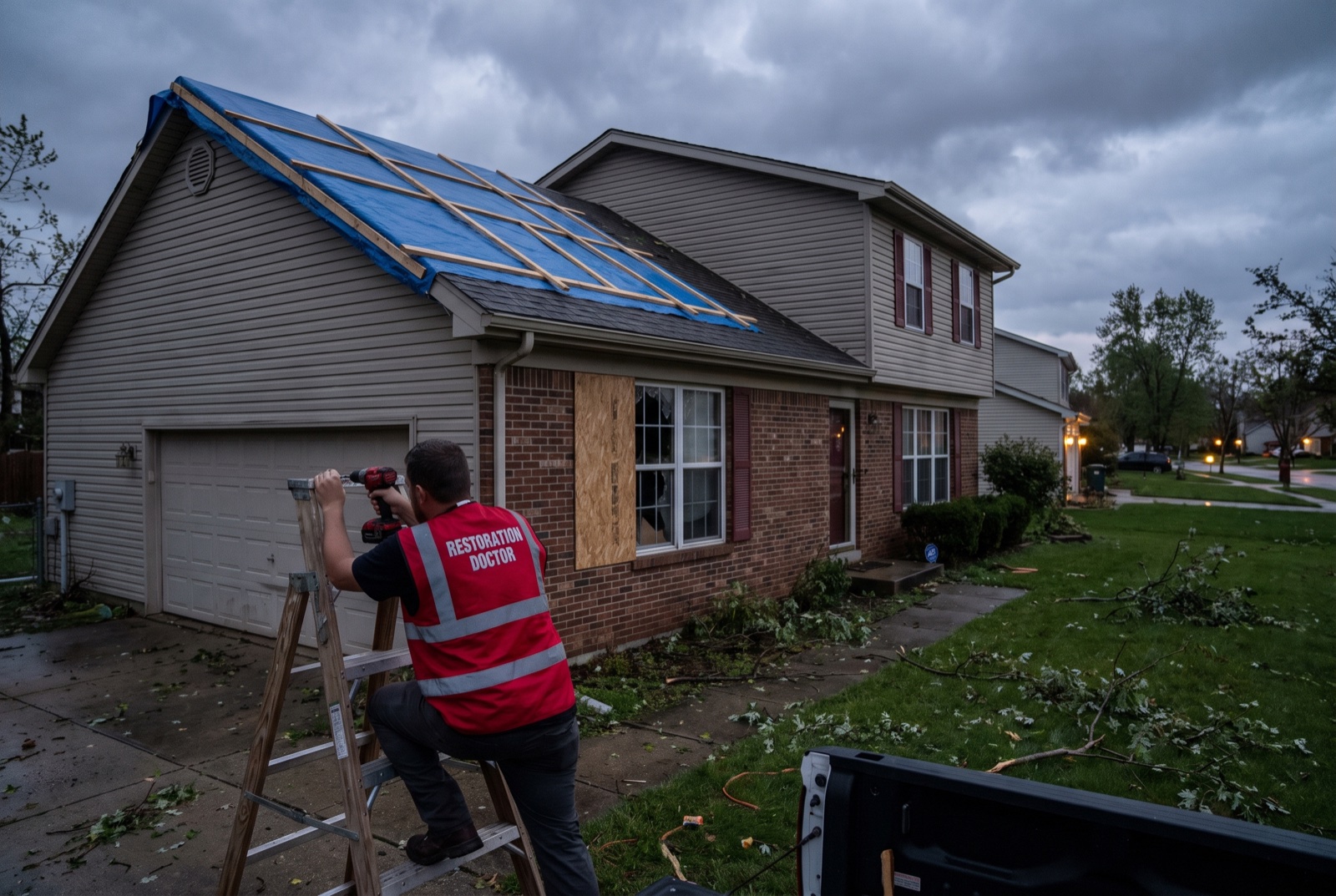
Call when you smell that persistent earthy, musty odor and cannot find the source. Call when a hygrometer sits above 60 percent for days no matter what the thermostat is doing. Call when you find visible growth larger than a small isolated patch, when it is on drywall or another porous material, when it appears to be coming from inside a wall or the HVAC system, or when it followed a water event. And call immediately after any water intrusion rather than waiting to see whether it dries on its own — in this climate it will not, and the difference between a drying job and a remediation job is usually about forty-eight hours of hesitation.
Restoration Doctor works throughout Fort Lauderdale and Broward — Victoria Park, Coral Ridge, Imperial Point, Wilton Manors, Oakland Park, Sailboat Bend, Plantation, and the surrounding communities — on both sides of this problem: fast, documented drying that prevents mold after a water event, and S520-aligned remediation with independent post-remediation verification when growth is already established. If you are unsure which one you have, call our 24/7 dispatch line and we will come look at the building before anyone quotes anything.