
Water Damage Restoration in Oakland Park, FL
Water damage restoration Oakland Park FL residents need is shaped by a single hard number: roughly 40 percent of the city sits inside a Special Flood Hazard Area. Oakland Park is threaded by the North Fork of the Middle River and a web of canals that double as the neighborhood's back roads, and its storm drainage ultimately empties into those same tidal waterways. That means a hard rain, a high tide, or the two together can back water up into streets and homes across large parts of town. Restoration Doctor of Miami covers Oakland Park 24/7 at (786) 213-9489, scoping every loss around the way water actually enters the structure.
The city carries a real, documented flood history. A rain-and-high-tide event in 1999 damaged hundreds of home sites in the Lloyd Estates and Sleepy Hollow neighborhoods — a reminder that the exposure here is not theoretical. We work as the South Florida arm of the multi-state Restoration Doctor operation, responding from 1200 Brickell Ave, Suite 1950 #1007, Miami, FL 33131. We keep no local storefront in Oakland Park; what we bring is fast, correctly-scoped mitigation when a home takes on water.
How we dry Oakland Park properties
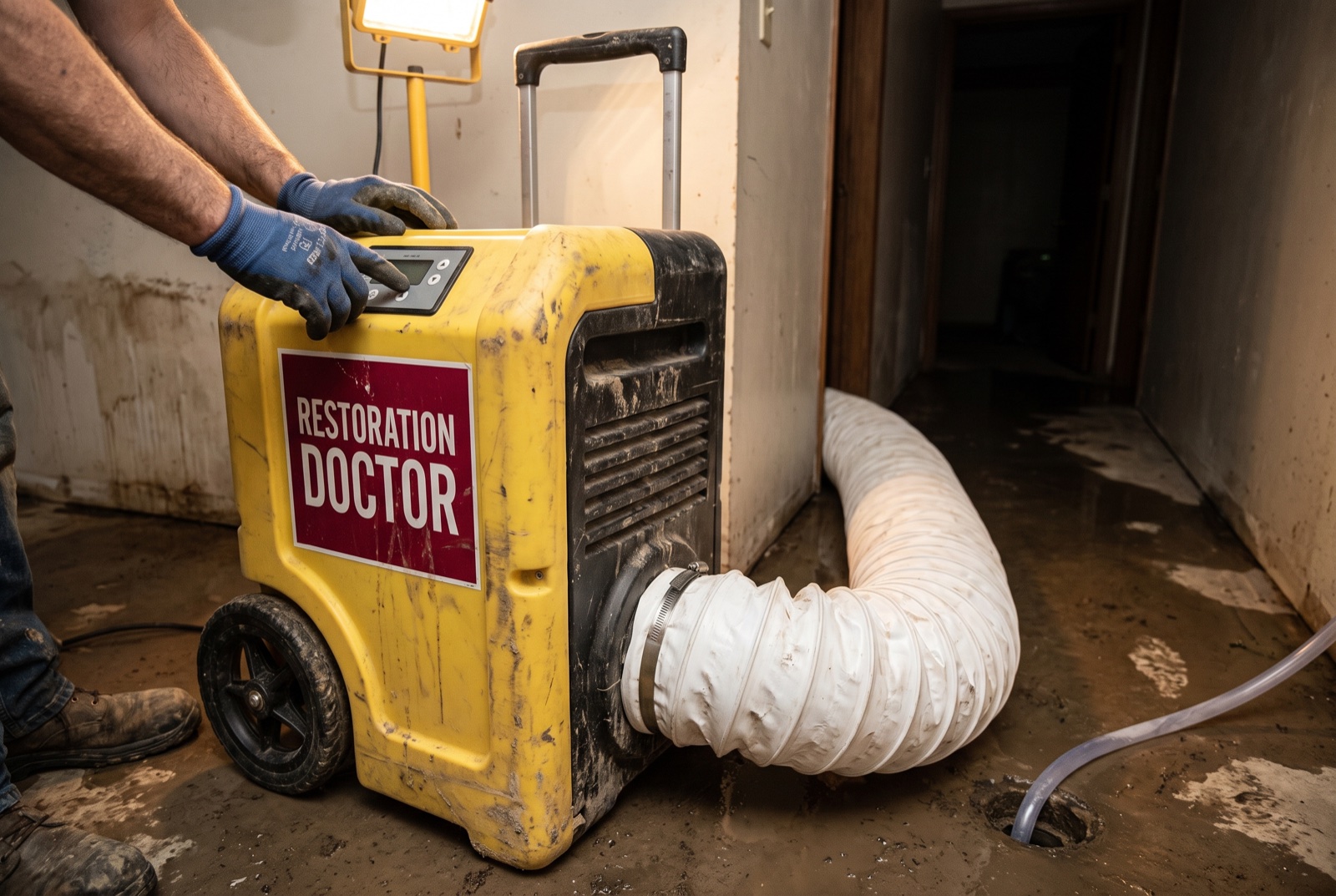
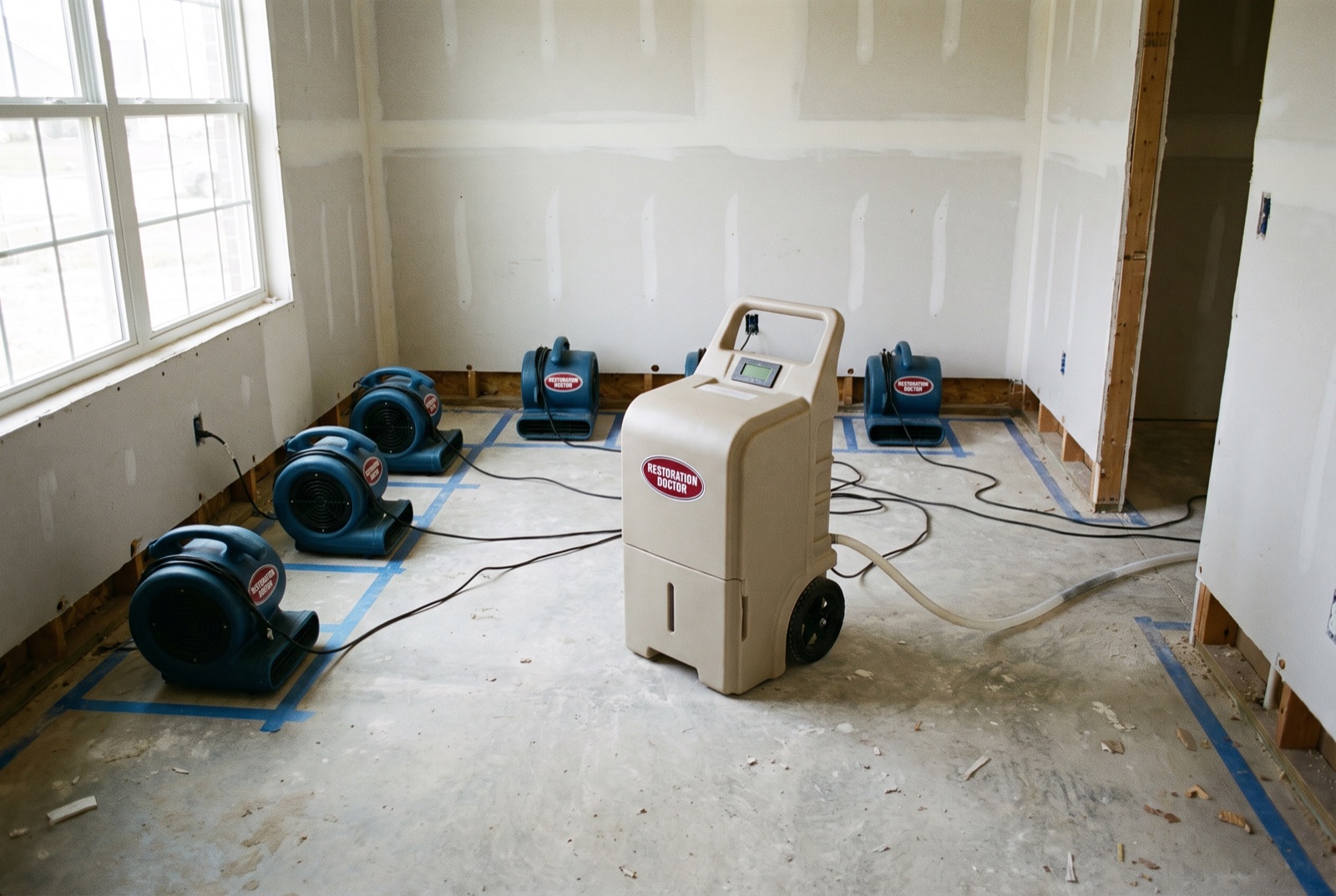
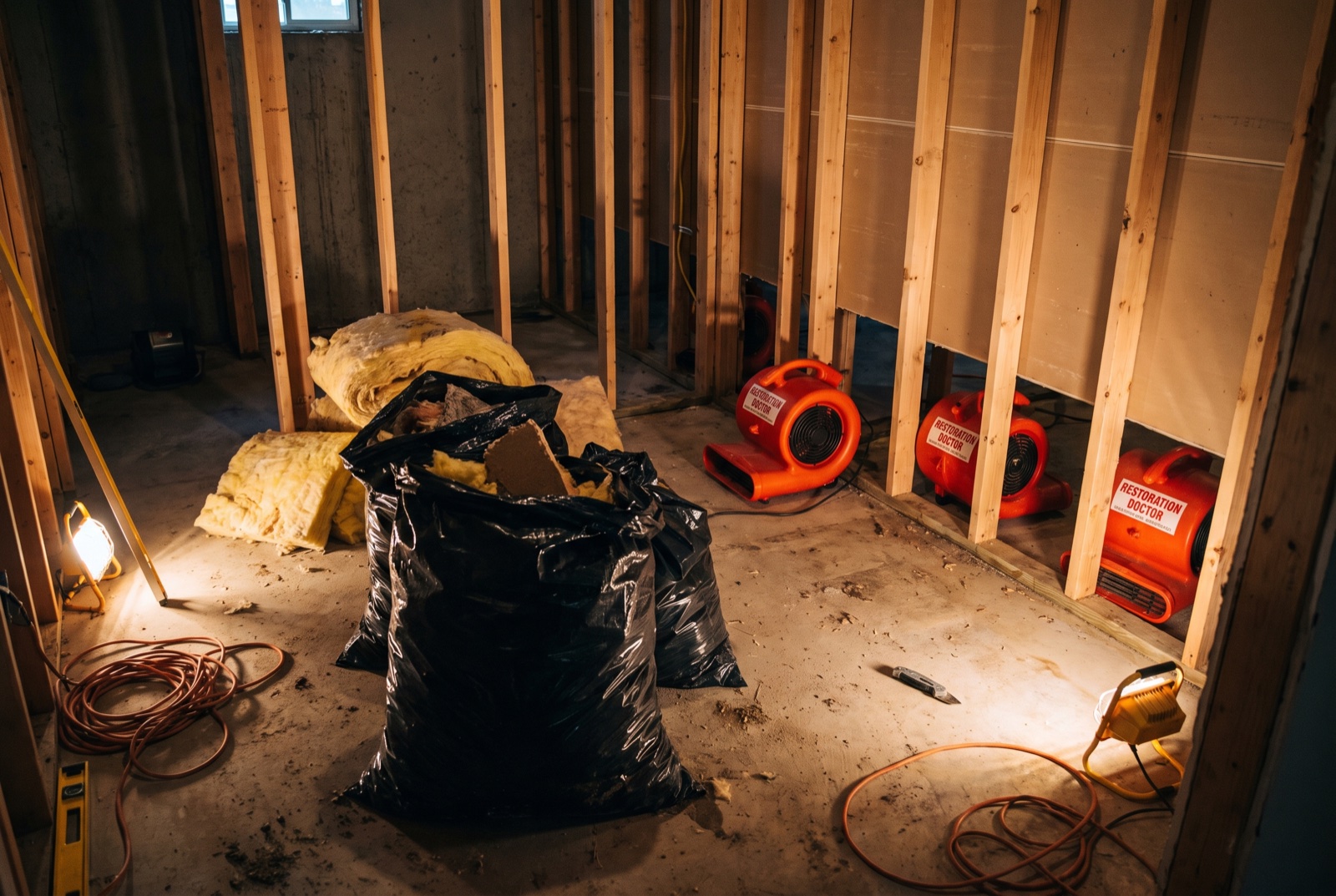
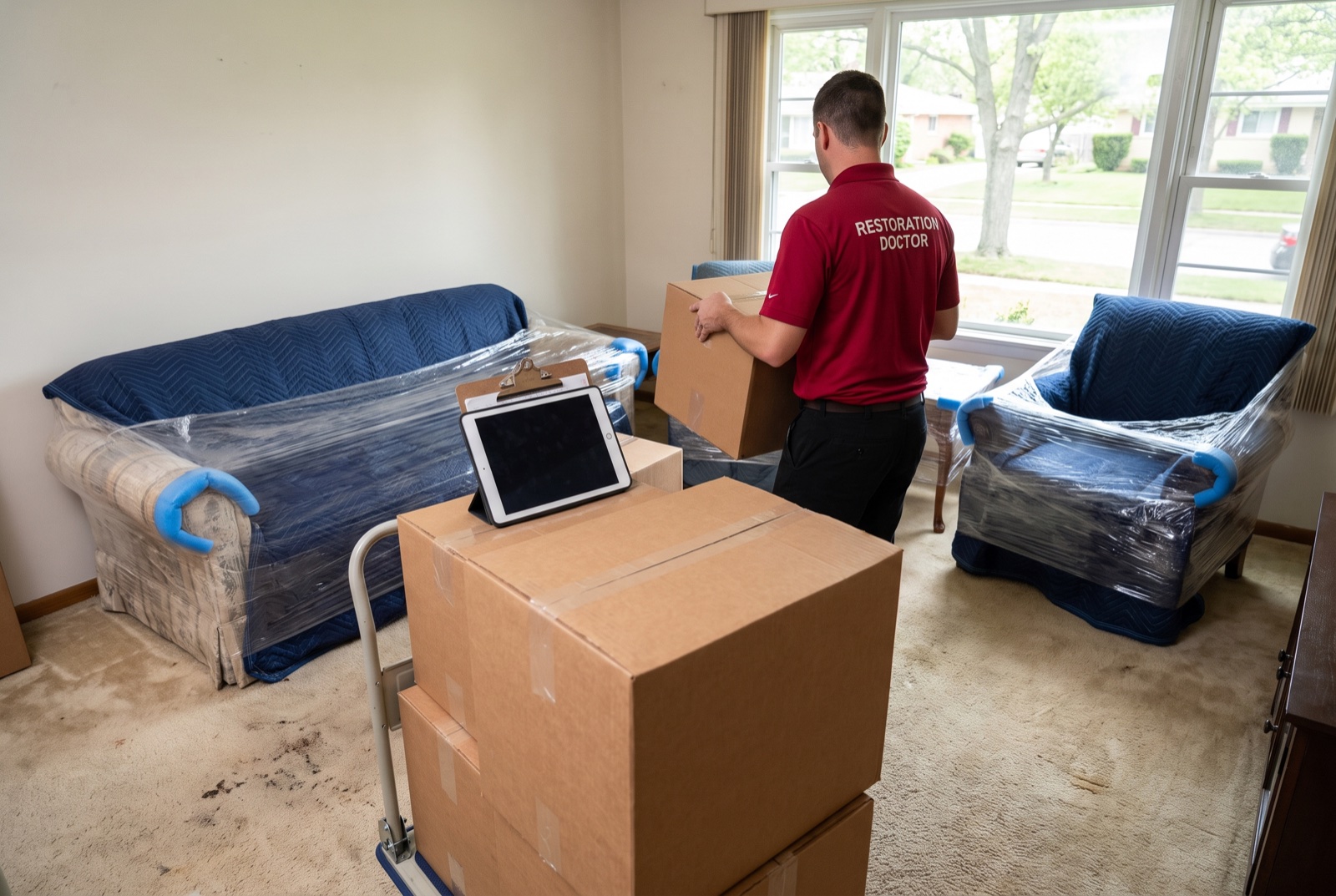
Illustrative views of the equipment and process our crews deploy — extraction, air movers, LGR dehumidification, moisture mapping, and containment.
How water damage behaves in Oakland Park
Canals that drain the city — and sometimes fill it
The canals give Oakland Park its character, but they are also the mechanism of its flooding. The bulk of the city's storm drainage flows into lakes and canals interconnected with tidal and Intracoastal waterways, so when tides run high the system loses its ability to carry water away and instead lets it linger in streets, swales, and yards. In the lowest neighborhoods that can happen with little or no rain, and it happens repeatedly in the same places.
Water arriving from a canal or a tidal backup is not clean water. Under the IICRC S500 standard we treat it as contaminated: extraction, disposal of unsalvageable porous materials, antimicrobial treatment, and verified drying — not fans and hope. The salt content is the part homeowners underestimate; chlorides settle into wall bases and fasteners and keep pulling moisture and corroding metal long after the tile looks dry, so a canal-water loss is cleaned and confirmed to a different standard than a household pipe break.
Rain the drainage cannot outrun
When rainfall overwhelms the canals and the North Fork of the Middle River, water rises and enters homes at grade — through thresholds, garage doors, and weep points — even in blocks well back from open water. The 1999 event that flooded Lloyd Estates and Sleepy Hollow is the local benchmark for exactly this failure mode, and it is why so much of the city carries a flood designation today.
Street flooding that enters a home is handled as contaminated water, and the drying clock starts immediately. In this heat, saturated drywall and baseboard begin supporting growth within days, so speed is the whole game. It is also why we talk plainly about flood coverage: rising water from rain or tide is generally excluded from standard homeowner policies and addressed through separate flood insurance, commonly the NFIP. Policies vary and we promise nothing on coverage — but we document the entry path in detail precisely because that classification drives how the claim is handled.
Aging homes, aging plumbing
Not every Oakland Park loss comes from outside. The mid-century housing stock is at the age where original supply lines, cast-iron drains, and older water heaters give out, and in a single-story slab home a hidden supply break travels flat and fast across tile before a soft baseboard gives it away. We trace clean-water losses to the source and dry the assembly the way its construction requires.
Where a renovation has buried new millwork or floated flooring over the old slab, moisture hides in cavities a visual pass misses — and one thing we never do is gatekeep the response. As the property owner you decide when mitigation starts; you do not need a carrier's sign-off to keep your home from getting worse. We begin when you authorize us and build the record from the first hour. Where drying uncovers established growth, we remediate under IICRC S520 with proper containment.
Oakland Park homes and how they fail
Oakland Park's residential core is classic post-war South Florida. Neighborhoods like Coral Heights were built largely from the 1950s through the 1970s: single-story concrete-block ranch homes with big windows, carports or single garages, and generous backyards that long ago became pool-and-patio living. These houses sit on slab, finished in terrazzo or tile, and many have cycled through one or more renovations that added modern kitchens and floated flooring on top of the original structure.
Closer to the canals, the housing turns waterfront — homes whose rear lots meet the Middle River system directly, where seawalls and low garages are the first things the water finds. Interior neighborhoods such as Lloyd Estates and Sleepy Hollow carry the older, lower-lying blocks with the deepest flood record. Across the whole mix, the shared trait is hard flooring over concrete slab, which is why our drying rarely follows the visible waterline. It follows the concealed path — baseboards, wall cavities, cabinet kicks, and any wood floor bonded to the slab — traced with moisture meters and thermal imaging.
Oakland Park neighborhoods we serve
Real Broward County communities — and the water losses we most often see in each.
1950s-70s ranch homes on slab near the eastern edge; renovations bury new flooring and cabinetry over original concrete.
Lower-lying interior neighborhood with a documented flood history from the 1999 rain-and-tide event.
Older blocks that flooded alongside Lloyd Estates in 1999; grade-level intrusion is the recurring call.
Established mid-century streets where canal proximity drives tidal backup into swales and garages.
Canal-front homes whose seawalls and low garages take on brackish water on high-tide events.
Suburban single-family blocks where heavy rain enters at thresholds when the canals run full.
Full restoration services in Oakland Park
One operation covers every category — from emergency mitigation to full reconstruction.
Water Damage Restoration
Extraction, structural drying, and moisture verification for pipe failures, king-tide intrusion, and unit-to-unit leaks in Fort Lauderdale homes, condos, and canal-front properties.
Storm & Hurricane Damage Restoration
Emergency board-up, tarping, storm-surge and flood extraction, and post-hurricane structural drying for homes, canal properties, and condo towers across Fort Lauderdale and Broward County.
Mold Remediation
S520-based mold remediation: containment, HEPA-filtered removal, moisture-source correction, and post-remediation verification for Fort Lauderdale homes, condos, and waterfront properties.
Sewage Cleanup
Category 3 water mitigation: sewage extraction, contaminated material removal, disinfection, and structural drying for backups, drain failures, and tidal surcharge in Broward County.
Fire & Smoke Damage Restoration
Structure securing, soot and smoke residue removal, odor treatment, and combined fire-and-water mitigation for Fort Lauderdale and Broward County properties.
Contents Restoration & Pack-Out
Full-chain contents handling for Broward County: barcode-tracked inventory, pack-out, restoration cleaning, climate-controlled storage, and organized pack-back.
What Oakland Park homeowners look for
Oakland Park homeowners have watched plenty of storm-season contractors roll through with self-awarded five stars, and they have learned to discount ratings a company grades for itself. Ours are not self-graded: verified customer reviews for the Restoration Doctor operation live on a dedicated hub at RestorationDoctorsReviews.com, linked to the genuine Google source instead of retyped onto this page.
Look them over, judge for yourself, and call (786) 213-9489 when water reaches your home.
Frequently asked
Active water, mold, fire, or sewage event?
Connect directly with the Restoration Doctor team for your region. Crews are on standby 24/7 with documented response protocols.