
Water Damage Restoration in Pompano Beach, FL
Water damage restoration Pompano Beach FL property owners search for spans two very different worlds within one city: canal-striped single-family neighborhoods on the mainland and condo towers along the ocean. The common thread is water, and a lot of it — the city reports that more than 32 percent of its buildings sit in a Special Flood Hazard Area, and much of its storm drainage flows into lakes and canals interconnected with tidal waterways like the Pompano Canal and the Cypress Creek Canal. When tides run high, that interconnection pushes water back into streets, swales, and lawns. Restoration Doctor of Miami covers Pompano Beach 24/7 at (786) 213-9489 and scopes each loss around how the water reached the structure.
Exposure is not evenly distributed. Properties east of A1A face the highest storm-surge risk, canal-front homes contend with tidal backup at their seawalls, and inland blocks flood when the canal system runs full during heavy rain. We are the South Florida arm of the multi-state Restoration Doctor operation, dispatching from 1200 Brickell Ave, Suite 1950 #1007, Miami, FL 33131 — no local Pompano storefront, just fast, correctly-scoped mitigation wherever in the city the water shows up.
How we dry Pompano Beach properties
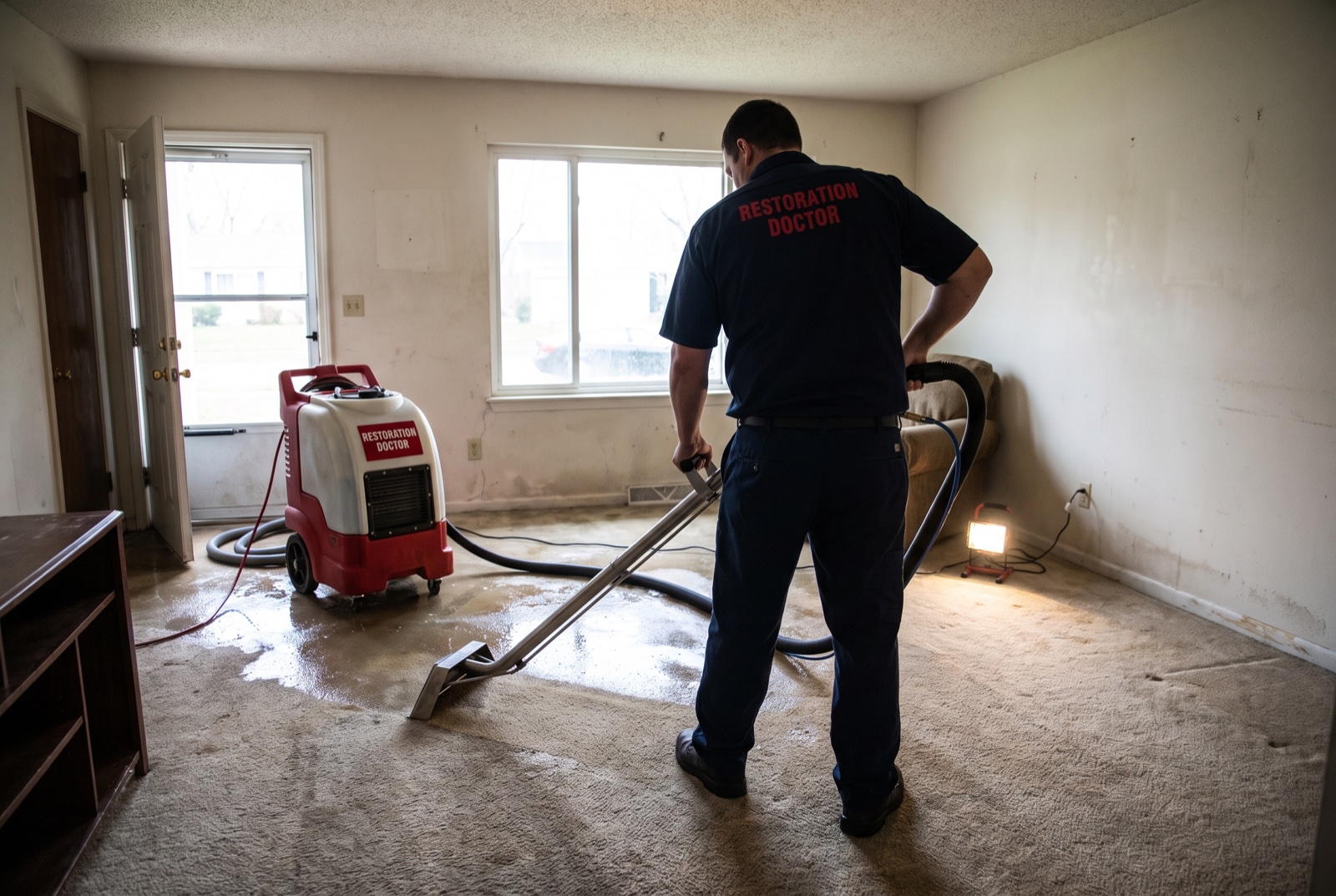
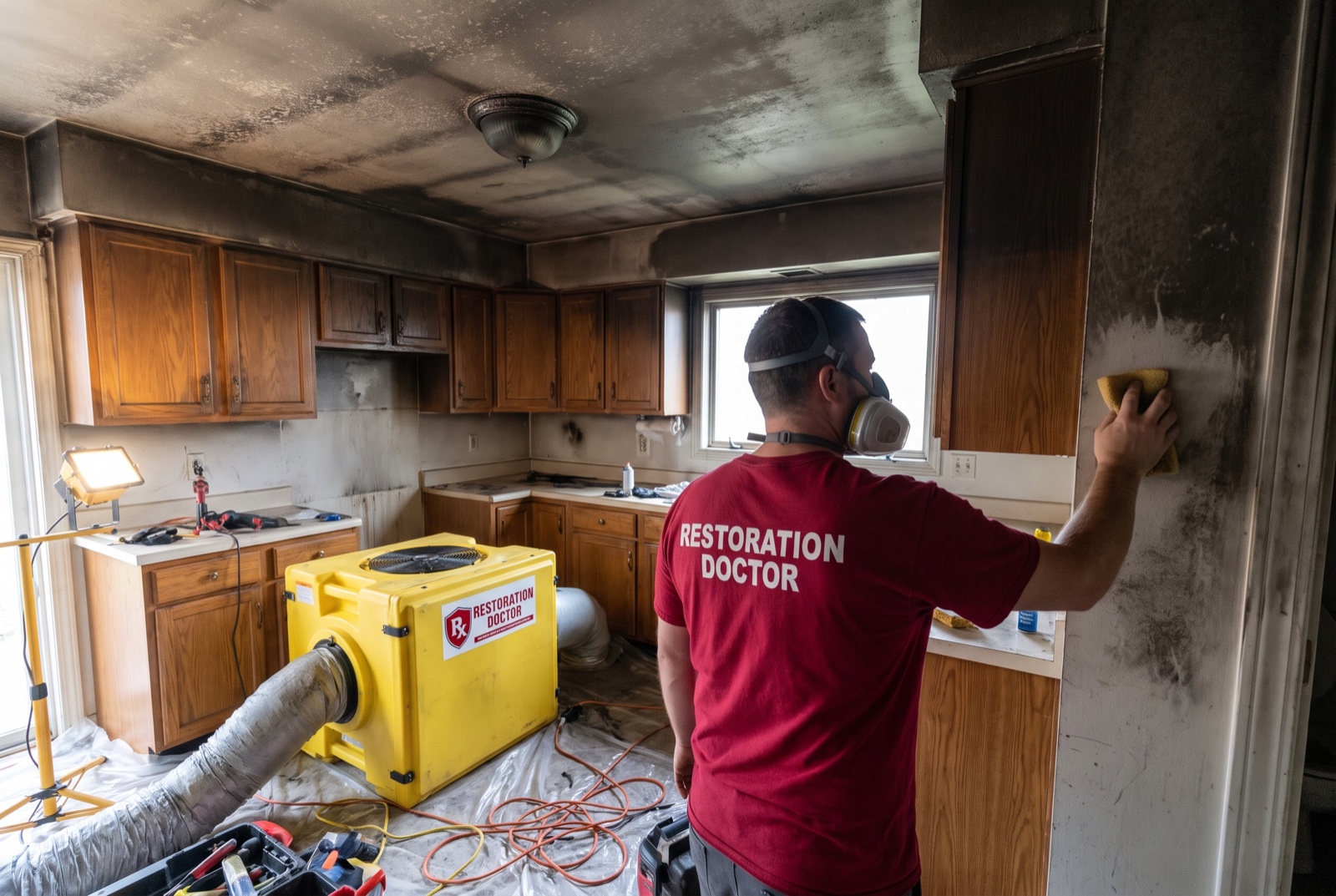
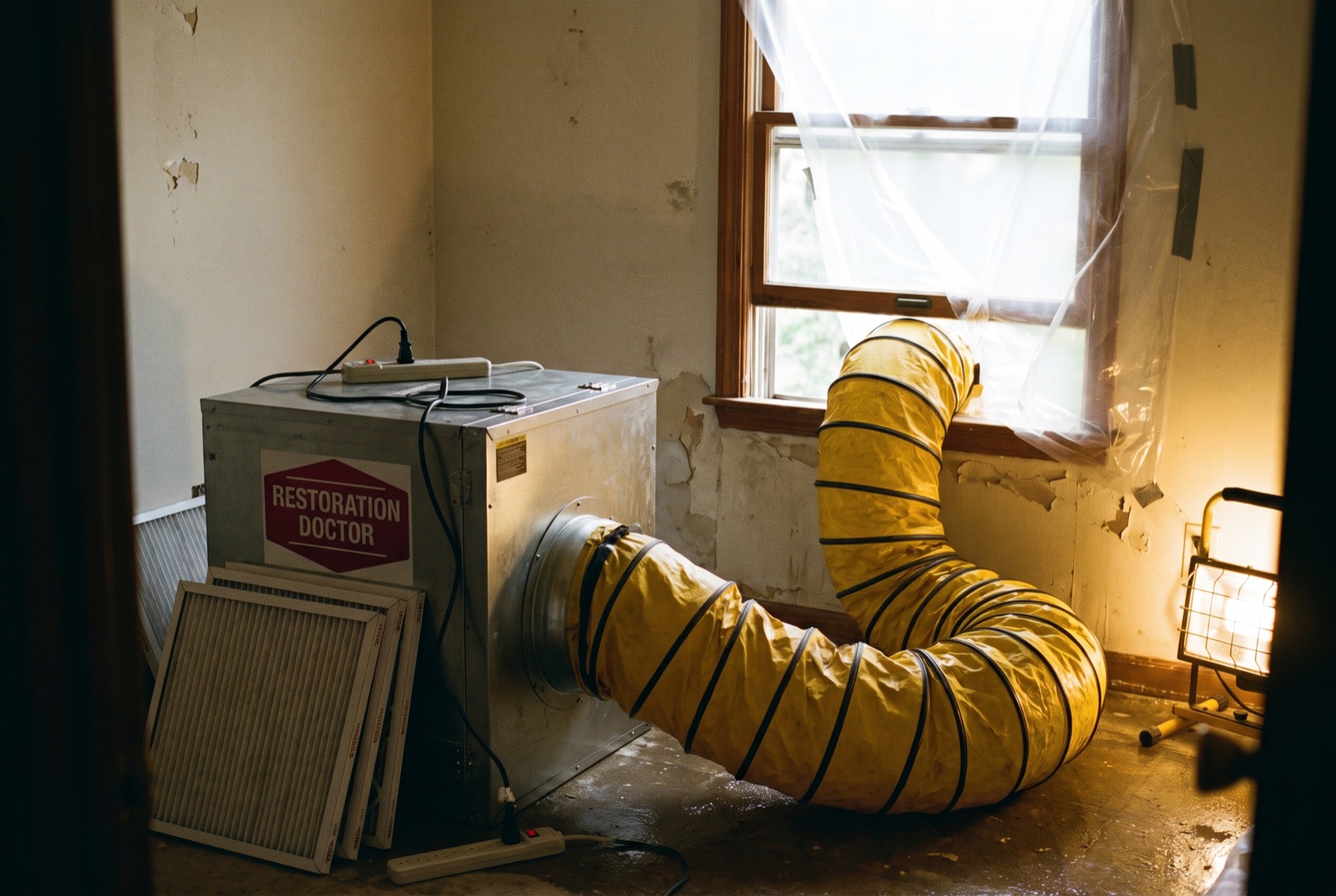
Illustrative views of the equipment and process our crews deploy — extraction, air movers, LGR dehumidification, moisture mapping, and containment.
How water damage behaves in Pompano Beach
When the tide comes over the seawall
In the canal neighborhoods, king tides and storm-driven high water push brackish canal water up against seawalls built to older standards — and increasingly over them, into yards, low garages, and against door thresholds. Because so much of the city's drainage is interconnected with these tidal canals, the backup can happen with little rain, and it recurs in the same low blocks season after season.
Brackish canal water is contaminated water under the IICRC S500 standard, not the clean water of a supply leak. That means extraction, removal of unsalvageable porous materials, antimicrobial treatment, and verified drying. Salt is the complication that outlasts the flood: chlorides settle into slabs, wall bases, and metal fasteners and keep drawing moisture and corroding hardware after the surface reads dry, so a tidal loss gets flushed, cleaned, and confirmed to a different standard than a household pipe break.
Storm surge, named systems, and the wind-versus-water file
Pompano Beach's oceanfront exposure means named storms can bring surge and wind-driven rain together, and properties east of A1A carry the sharpest surge risk. In a single event a home or tower can take water from above — a breached roof, slider, or window — and from below via surge and street flooding, sometimes in the same structure. Post-storm disputes over wind versus water between carriers and flood programs are a well-known Florida reality, and the homeowner's strongest asset is contemporaneous documentation.
We photograph and log each intrusion path separately, from the first walkthrough through dry-down, so the record shows what entered where and when. On the coverage side we are candid: rising water from surge, tide, or overwhelmed drainage is generally excluded from standard homeowner policies and addressed through separate flood insurance, commonly the NFIP. Policies vary and we make no coverage promises — we document carefully precisely because that classification shapes how the loss is handled.
Condo losses that don't stay in one unit
In the beachside towers, water is rarely a single-unit problem. A failed supply line, water heater, or condensate pan on an upper floor sends water down through the slab into the units below, crossing the line between unit-owner and association responsibility and often involving several parties at once. Speed and clear documentation matter even more here, because every hour the water sits it reaches another unit and another assembly.
We contain and dry these vertical losses as a connected event, tracking moisture through ceilings, wall cavities, and shared elements, and we do it without waiting for anyone's sign-off to begin — as the owner or association, emergency mitigation to stop ongoing damage is your call, and we start when you authorize us. In this climate, saturated drywall and baseboard can support growth within a few days, so where drying reveals established growth we remediate under the IICRC S520 standard with containment and controlled removal.
Pompano Beach homes and how they fail
On the mainland, Pompano Beach is defined by its canals. Boating neighborhoods like Cypress Harbor, Garden Isles, and Harbor Village put single-family homes on deep, ocean-access waterways, many with a hundred feet or more of water frontage behind aging or upgraded seawalls. The stock ranges from mid-century concrete-block ranches on slab to newer custom builds that maxed out the same waterfront lots — but the floor assembly is almost always hard surface over concrete, so a seawall overtopping or a canal backup reaches wall bases and cabinetry before it ever puddles visibly.
The beachside is a different building type entirely. The barrier-island and near-beach corridors run to mid- and high-rise condominium towers, where the water emergencies are stacked and shared: a supply-line break, water-heater failure, or AC condensate overflow in one unit migrates down through the slab and into the units below, and a wind-driven rain intrusion at an upper floor becomes a multi-unit, common-element problem. We map and dry both the mainland slab losses and the vertical condo losses with meters and thermal imaging, following the water through the assemblies rather than assuming its reach from the visible line.
Pompano Beach neighborhoods we serve
Real Broward County communities — and the water losses we most often see in each.
Deep-water boating enclave on the south side; seawall overtopping on king tides handled as contaminated-water losses.
Canal-front single-family homes where tidal backup reaches yards, low garages, and thresholds.
Ocean-access waterway homes on slab where brackish intrusion wicks into wall bases before it puddles.
Established inland blocks that flood when the Cypress Creek Canal system runs full during heavy rain.
Condo towers and near-beach homes carrying the city's highest storm-surge exposure.
Older mainland neighborhood with aging plumbing and slab construction that spreads interior leaks flat and fast.
Full restoration services in Pompano Beach
One operation covers every category — from emergency mitigation to full reconstruction.
Water Damage Restoration
Extraction, structural drying, and moisture verification for pipe failures, king-tide intrusion, and unit-to-unit leaks in Fort Lauderdale homes, condos, and canal-front properties.
Storm & Hurricane Damage Restoration
Emergency board-up, tarping, storm-surge and flood extraction, and post-hurricane structural drying for homes, canal properties, and condo towers across Fort Lauderdale and Broward County.
Mold Remediation
S520-based mold remediation: containment, HEPA-filtered removal, moisture-source correction, and post-remediation verification for Fort Lauderdale homes, condos, and waterfront properties.
Sewage Cleanup
Category 3 water mitigation: sewage extraction, contaminated material removal, disinfection, and structural drying for backups, drain failures, and tidal surcharge in Broward County.
Fire & Smoke Damage Restoration
Structure securing, soot and smoke residue removal, odor treatment, and combined fire-and-water mitigation for Fort Lauderdale and Broward County properties.
Contents Restoration & Pack-Out
Full-chain contents handling for Broward County: barcode-tracked inventory, pack-out, restoration cleaning, climate-controlled storage, and organized pack-back.
What Pompano Beach homeowners look for
Between the boating neighborhoods and the beachfront towers, Pompano Beach owners have seen every storm-chasing contractor sign there is, and they rightly distrust ratings a company hands itself. Ours are not self-assigned: verified customer reviews for the Restoration Doctor operation live on a dedicated hub at RestorationDoctorsReviews.com, linked to the genuine Google source rather than typed onto this page.
Check the hub, weigh it yourself, and call (786) 213-9489 when the water arrives.
Frequently asked
Active water, mold, fire, or sewage event?
Connect directly with the Restoration Doctor team for your region. Crews are on standby 24/7 with documented response protocols.