
Water Damage Restoration in Plantation, FL
Water damage restoration Plantation FL homeowners look for has a different signature than the coastal cities to the east. Plantation is an inland, master-planned suburb wedged between I-95 and U.S. 441 west of the airport, and it does not have a seawall problem — it has a rainfall-and-drainage problem. The city was literally built on drained land, and its low-lying pockets, finger isles, and man-made lakes still fill when a stalled storm outruns the canals and pumps that keep the ground dry. Restoration Doctor of Miami serves Plantation 24/7 at (786) 213-9489, scoping each loss around how and where the water got in.
The city's origin story is a flood story. When the Clark family began building here in the late 1940s, early homes were destroyed by relentless rain and back-to-back hurricanes, and construction only resumed after dikes, cofferdams, and pumping stations were added. That engineered drainage is what makes Plantation livable — and it is also the system that, when overwhelmed, sends water into homes at grade. We operate as the South Florida arm of the multi-state Restoration Doctor organization from 1200 Brickell Ave, Suite 1950 #1007, Miami, FL 33131, with no local street office in Plantation, only rapid coverage of it.
How we dry Plantation properties
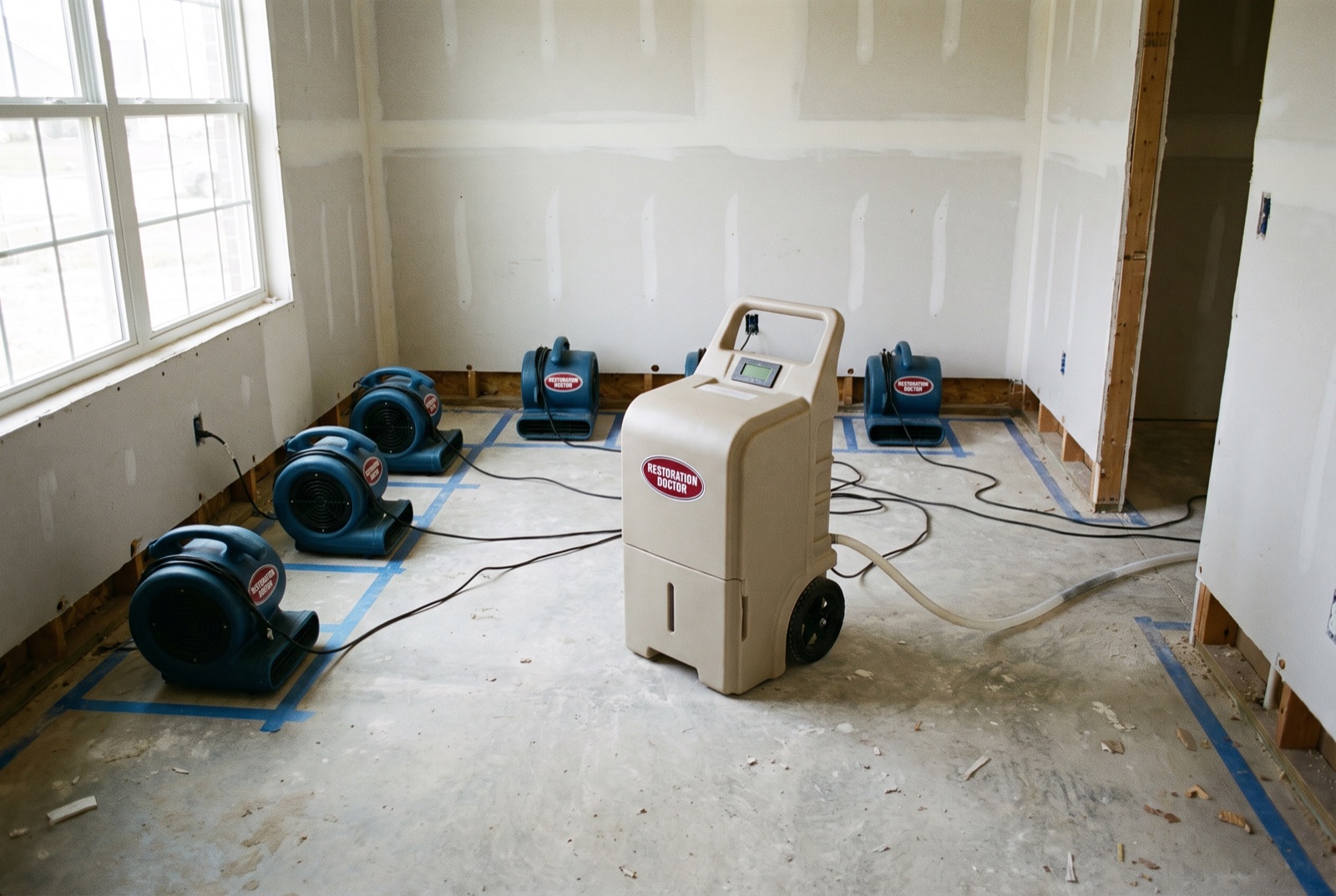
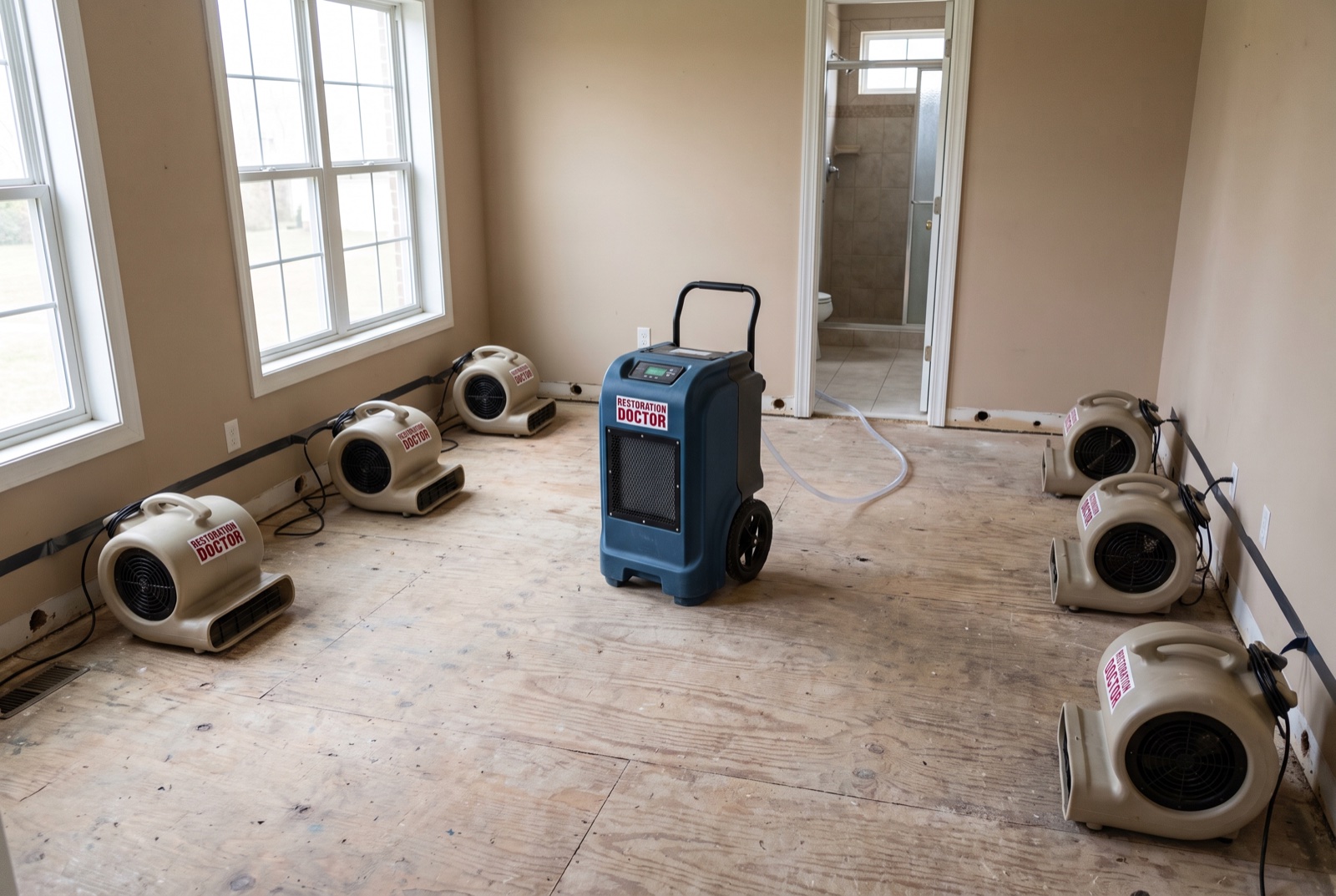
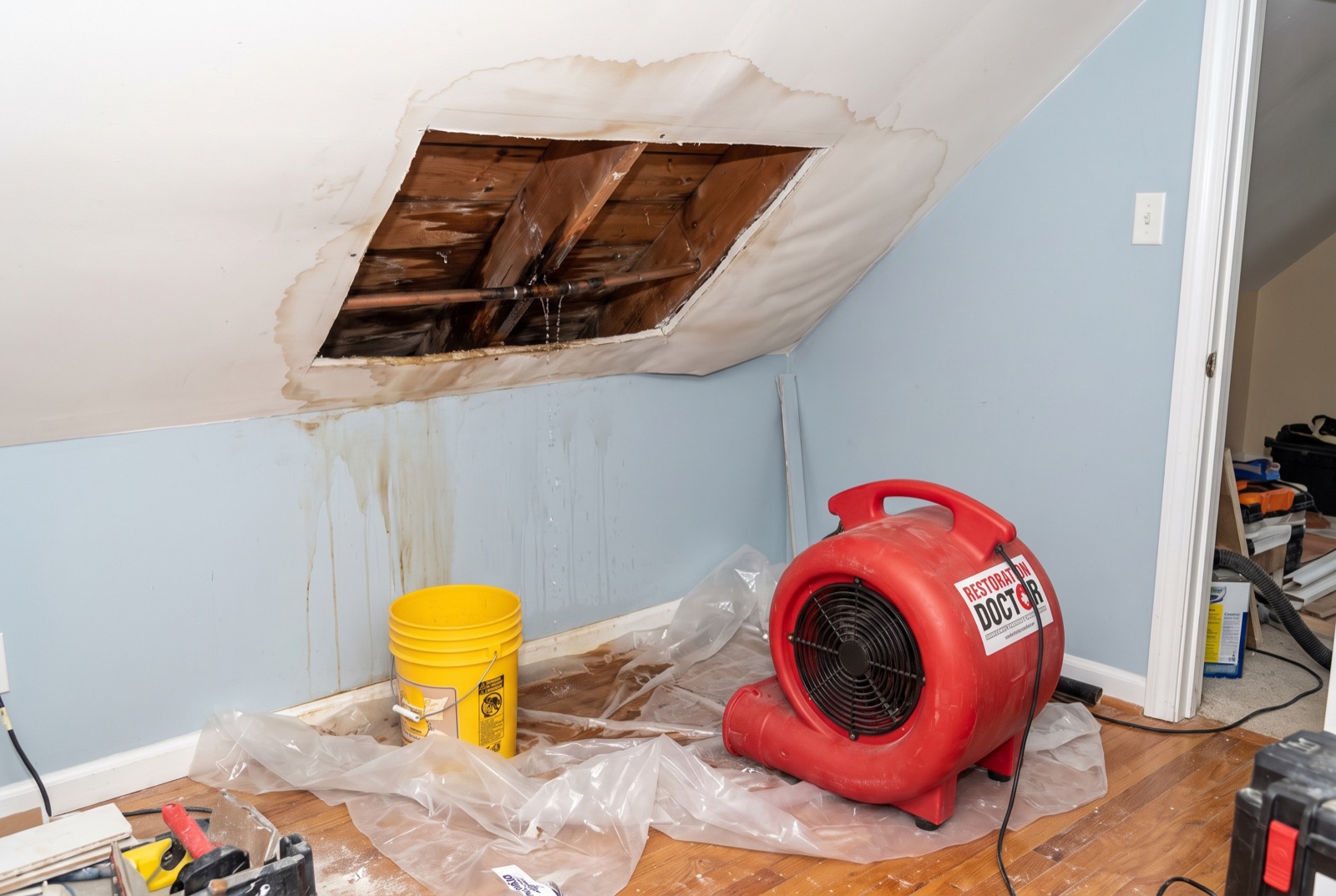
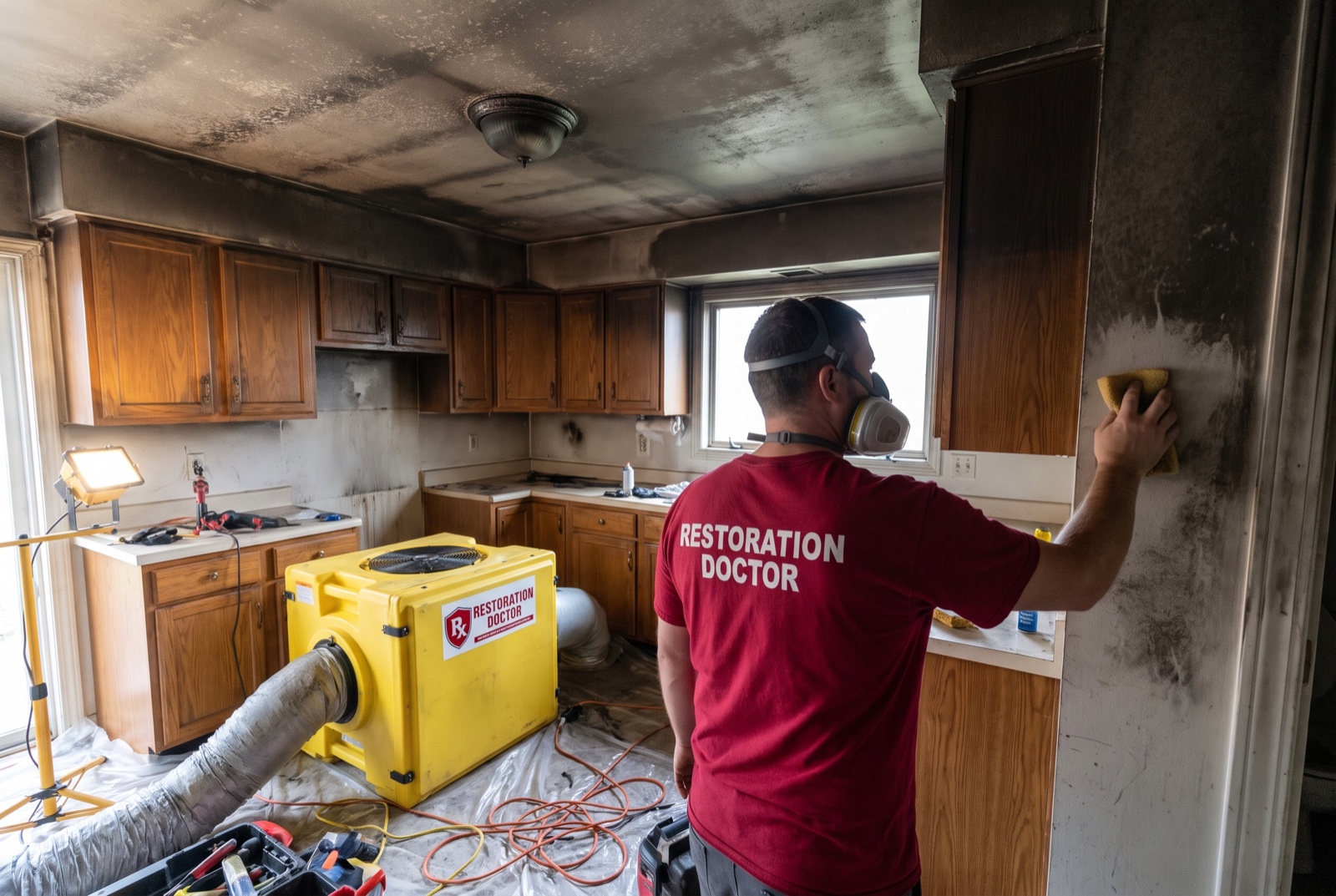
Illustrative views of the equipment and process our crews deploy — extraction, air movers, LGR dehumidification, moisture mapping, and containment.
How water damage behaves in Plantation
A city engineered to shed water
Plantation exists because its land was drained and kept drained. The dikes and pumping stations added after the 1940s flooding still define how the city handles rain: canals, man-made lakes, and pumps move stormwater off the ground and out of neighborhoods. When rainfall stays within the system's capacity, it works quietly and well. When a slow, heavy storm exceeds it, the lakes and canals rise, and low-lying blocks and finger-isle lots see water climb toward and over thresholds.
Water that enters a home from an overwhelmed canal or lake is handled as contaminated under the IICRC S500 standard — extraction, removal of unsalvageable porous materials, antimicrobial treatment, and verified drying, not fans alone. It carries silt, lawn chemicals, and whatever the runoff picked up on the way, which is why grade-level flood intrusion is scoped and cleaned differently than a clean supply-line break inside the same house.
The more common call: plumbing and appliances
For most Plantation homeowners, the water emergency is internal, not meteorological. Aging supply lines and cast-iron drains in the older eastern ranches, and failed water heaters, ice-maker lines, and second-floor bath overflows in the newer Jacaranda homes, are the everyday sources. In a single-story slab home a hidden leak spreads flat and fast across tile; in a two-story home it does the opposite and travels down. Both need the moisture traced to its origin and the whole wetted assembly dried, which is what we document from the first walkthrough.
Renovations complicate the picture. Updated kitchens, floated floors, and additions bury moisture in cavities a visual inspection misses, so we rely on meters and thermal imaging to find the water the eye cannot. Catching those hidden pockets early is the difference between a short dry-out and a mold job weeks down the line.
Heat, humidity, and the drying clock
Inland or not, Plantation shares South Florida's climate, and that climate is unforgiving to wet materials. Saturated drywall and baseboard can begin supporting microbial growth within a few days, so the value of a fast, correctly-scoped response is measured in hours. Homeowners who extract the standing water but leave the wall cavity wet are the ones who call back weeks later about a musty smell.
When we dry aggressively and early, remediation is usually avoidable. Where growth is already established, we remediate under the IICRC S520 standard with containment and controlled removal. And there is no permission to wait for: as the property owner, emergency mitigation to stop ongoing damage is your decision, and we begin the moment you authorize us — then build the documentation your claim will depend on. On flood-driven losses we are also candid that rising water is generally a separate flood-insurance matter, commonly through the NFIP; policies vary and we make no coverage promises, so we document the entry path with care.
Plantation homes and how they fail
Plantation is overwhelmingly single-family and suburban, and its housing spans a wide age range. The older eastern neighborhoods carry 1960s and early-1970s ranch homes on slab — concrete block, tile or terrazzo floors, single-story footprints that spread a loss out horizontally. Move west and the stock shifts to the master-planned Jacaranda communities and gated estates of the 1980s and beyond: larger two-story homes, some with wood-framed second floors, lakeside lots, and finished spaces that give water more assemblies to hide inside.
Because there are no basements here — everything is slab-on-grade — our drying concentrates on wall cavities, cabinetry, baseboards, and any wood or engineered flooring laid over the slab, mapped with meters and thermal imaging rather than guessed from the visible edge of the water. In the two-story Jacaranda homes, a supply break or overflow on an upper floor adds a second problem: water tracking down through ceilings, wall cavities, and stair assemblies to the level below, which we trace and dry as a connected system rather than two separate rooms.
Plantation neighborhoods we serve
Real Broward County communities — and the water losses we most often see in each.
Large-lot, semi-rural western estates where finger isles and man-made lakes raise flood exposure during heavy rain.
1980s-plus lakeside homes; upper-floor and appliance losses track down through two-story assemblies.
Waterfront blocks along the canal system where grade-level intrusion follows a full lake or canal.
Established single-family streets where aging supply lines and slab construction spread interior leaks flat and fast.
Older 1960s-70s ranches near U.S. 441 with original plumbing at the age of failure.
Golf-adjacent homes where low-lying pockets collect rainfall the drainage cannot immediately clear.
Full restoration services in Plantation
One operation covers every category — from emergency mitigation to full reconstruction.
Water Damage Restoration
Extraction, structural drying, and moisture verification for pipe failures, king-tide intrusion, and unit-to-unit leaks in Fort Lauderdale homes, condos, and canal-front properties.
Storm & Hurricane Damage Restoration
Emergency board-up, tarping, storm-surge and flood extraction, and post-hurricane structural drying for homes, canal properties, and condo towers across Fort Lauderdale and Broward County.
Mold Remediation
S520-based mold remediation: containment, HEPA-filtered removal, moisture-source correction, and post-remediation verification for Fort Lauderdale homes, condos, and waterfront properties.
Sewage Cleanup
Category 3 water mitigation: sewage extraction, contaminated material removal, disinfection, and structural drying for backups, drain failures, and tidal surcharge in Broward County.
Fire & Smoke Damage Restoration
Structure securing, soot and smoke residue removal, odor treatment, and combined fire-and-water mitigation for Fort Lauderdale and Broward County properties.
Contents Restoration & Pack-Out
Full-chain contents handling for Broward County: barcode-tracked inventory, pack-out, restoration cleaning, climate-controlled storage, and organized pack-back.
What Plantation homeowners look for
Plantation is a settled, long-tenure community where neighbors compare notes and a contractor's reputation is earned street by street, not bought with self-issued star ratings. Ours are not self-issued: verified customer reviews for the Restoration Doctor operation live on a dedicated hub at RestorationDoctorsReviews.com, tied to the genuine Google source rather than typed onto this page.
Read them, decide for yourself, and call (786) 213-9489 when the water starts rising.
Frequently asked
Active water, mold, fire, or sewage event?
Connect directly with the Restoration Doctor team for your region. Crews are on standby 24/7 with documented response protocols.