
Water Damage Restoration in Wilton Manors, FL
Water damage restoration Wilton Manors FL homeowners search for tends to start on a dry, sunny afternoon — not in a storm. This is the Island City, wrapped almost entirely by the North and South Forks of the Middle River, and its stormwater system is essentially gravity-fed. When the tide runs high, the outfalls that are supposed to drain the streets instead run backward, and water rises into swales, driveways, and low garages with a clear sky overhead. Restoration Doctor of Miami answers Wilton Manors emergencies around the clock at (786) 213-9489, and we scope every loss for how the water actually arrived, not how it looks after the fact.
Because Wilton Manors is compact and low-lying, the difference between a nuisance puddle and an interior loss is often a matter of inches and hours. A tide that tops a seawall or backs up a canal along Coral Gardens Drive can push brackish water across a yard and against a threshold long enough to wick into wall bases and cabinetry. We are the South Florida arm of the multi-state Restoration Doctor operation, dispatching from 1200 Brickell Ave, Suite 1950 #1007, Miami, FL 33131 — we hold no local street office here, only fast coverage of it.
How we dry Wilton Manors properties
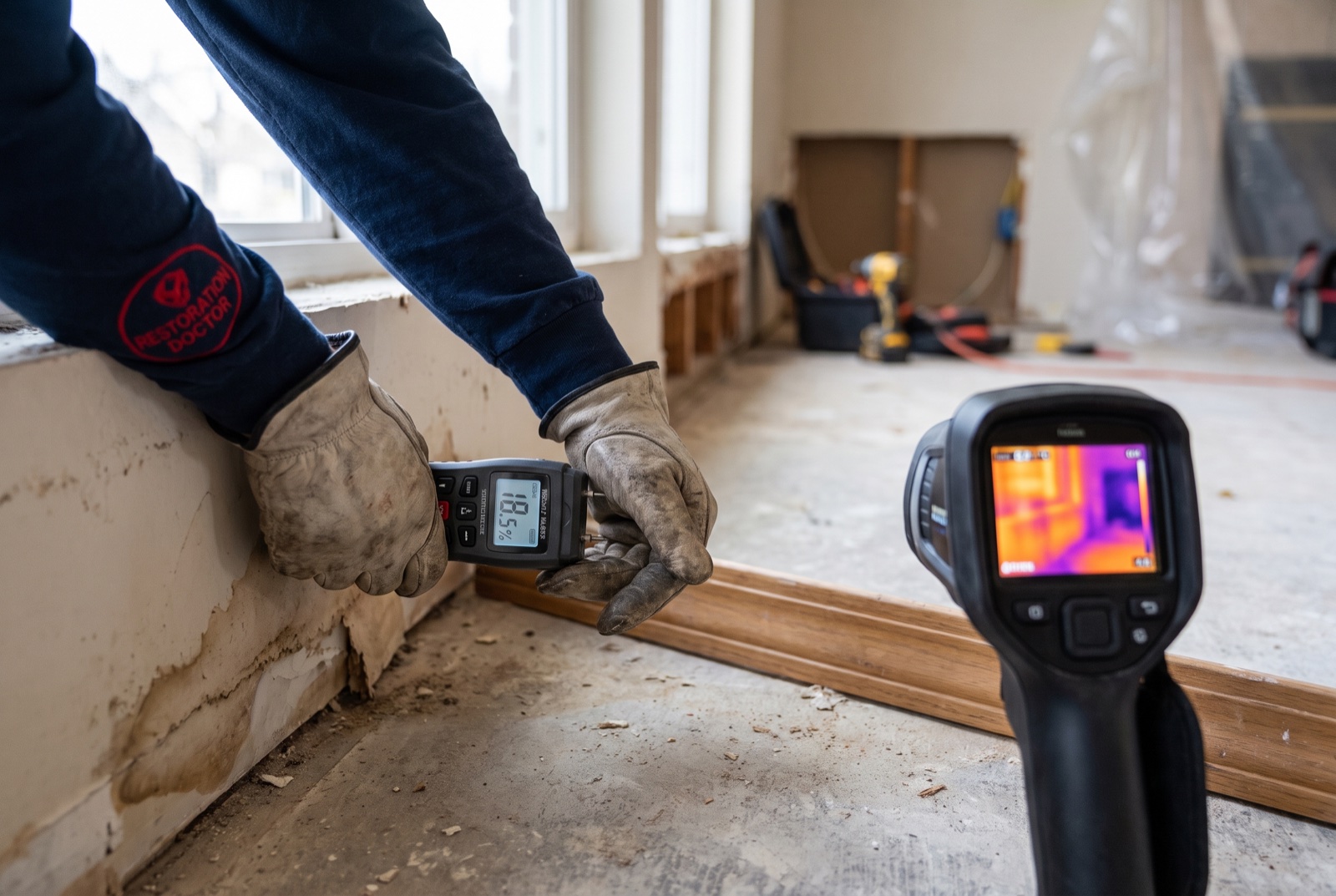
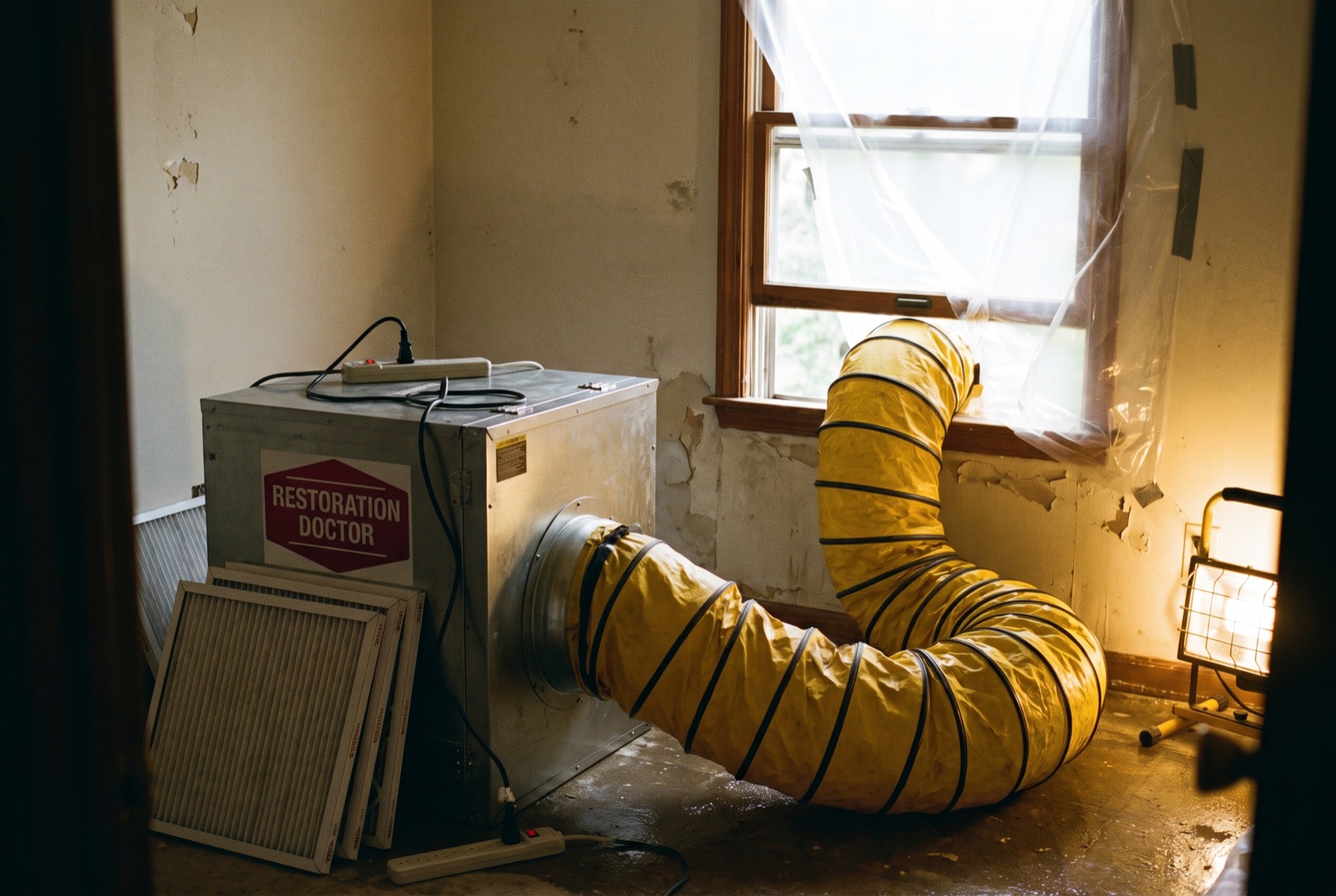
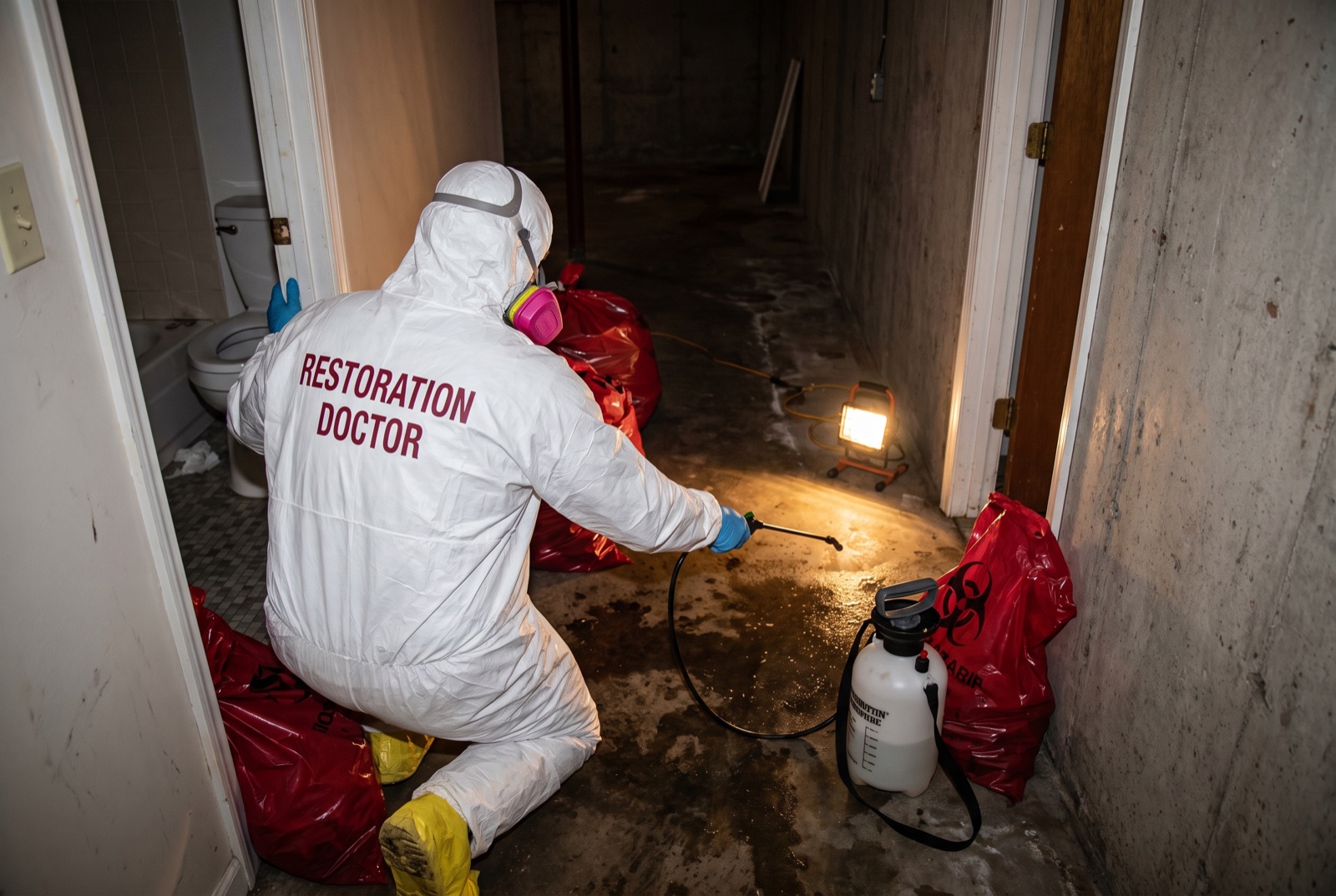
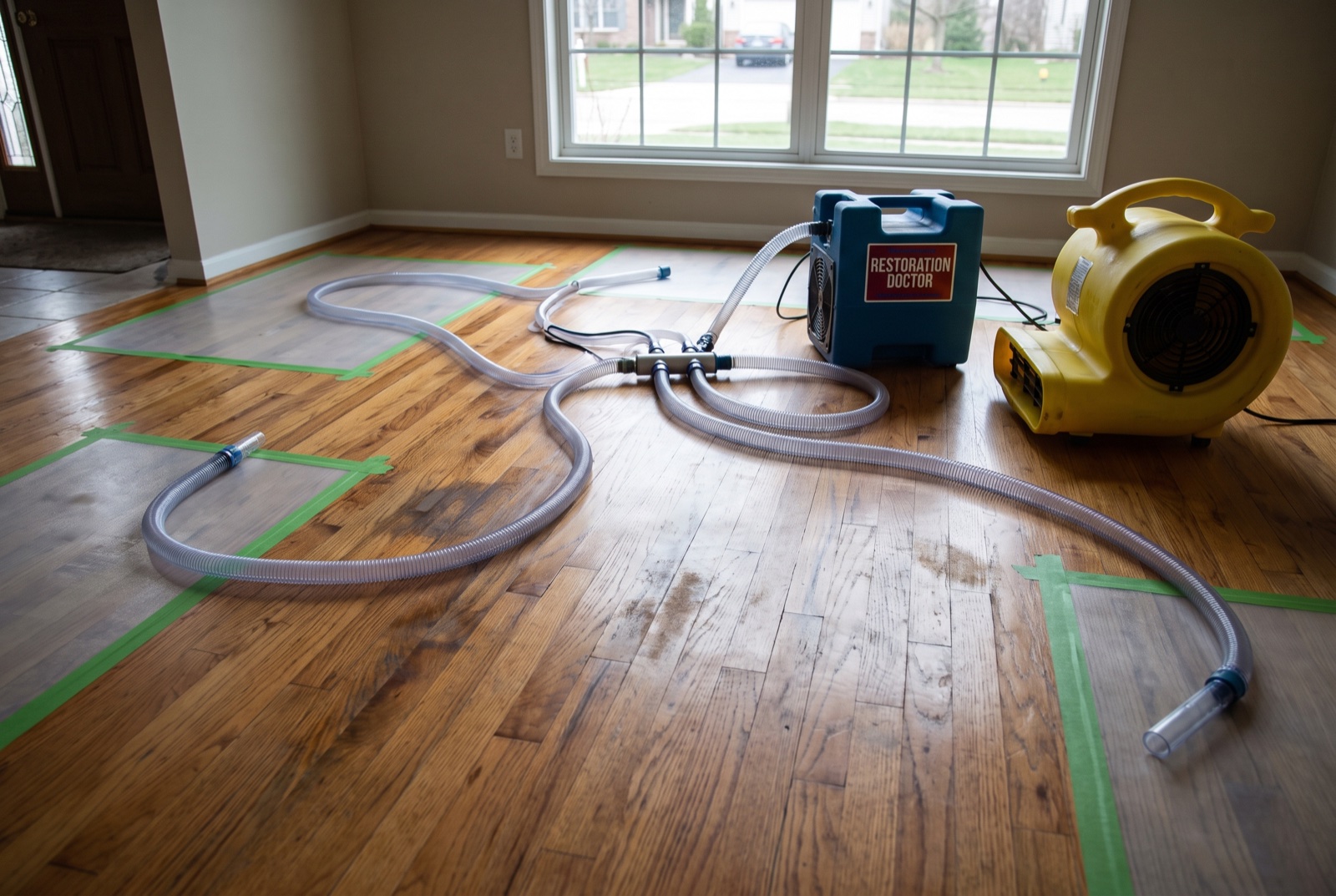
Illustrative views of the equipment and process our crews deploy — extraction, air movers, LGR dehumidification, moisture mapping, and containment.
How water damage behaves in Wilton Manors
Why does my street flood when it hasn't rained?
Wilton Manors is one of Broward County's clearest examples of tidal, or 'blue-sky,' flooding. With the island encircled by the Middle River and a stormwater network that drains by gravity, seasonal king tides simply overwhelm the outfalls: instead of carrying water away, the pipes let tidewater in. County resiliency mapping flags the Middle River area as vulnerable to exactly this repetitive intrusion, and residents in the lowest blocks see it several times a year with no storm on the radar.
That distinction changes the restoration. Brackish river and canal water is not clean water — under the IICRC S500 standard it is treated as contaminated, which means extraction, removal of unsalvageable porous materials, and antimicrobial treatment rather than fans alone. Salt is the quiet troublemaker: chlorides left behind in wall bases, slabs, and fasteners keep drawing moisture and corroding metal after the surface reads dry, so a tidal loss is flushed, cleaned, and verified differently than a supply-line break.
What about the pipes inside these older homes?
Tidal water is only half the story. The mid-century housing stock here is at the age where original galvanized supply lines, cast-iron drains, and first-generation water heaters fail — and in a single-story slab home, a supply break under a kitchen or bath spreads flat and fast across tile before anyone notices a soft baseboard. We trace these clean-water losses to their source, then dry the assembly the way its construction demands, documenting readings as we go.
Because so many Wilton Manors homes have been remodeled, we pay particular attention to what renovation buried. New cabinetry set on an old slab, a floated floor over terrazzo, or a wall furred out during an addition all trap moisture in places a visual inspection misses. Finding and drying those cavities early is what keeps a two-day dry-out from becoming a mold remediation project weeks later.
How fast does this become a mold problem?
Quickly, in this climate. In South Florida heat and humidity, saturated drywall and baseboard can begin supporting microbial growth within a couple of days — and a home that floods on a recurring tide never fully resets between events. The homeowners most at risk are the ones who mop the visible water and assume the job is done while the wall cavity behind the baseboard stays wet.
When we arrive early and dry aggressively, remediation is usually avoidable. Where growth is already established — common in a home with a history of repetitive tidal intrusion — we remediate under the IICRC S520 standard with containment and controlled removal, not by spraying over the problem. And you never need anyone's permission to start protecting your home: as the property owner, emergency mitigation is your call, and we begin the moment you authorize us, building the documentation your claim will rely on from the first hour.
Wilton Manors homes and how they fail
The bones of Wilton Manors are mid-century. The city's building boom ran through the 1950s and 1960s, and the dominant house is a single-story concrete-block ranch on a slab — terrazzo or tile underfoot, jalousie-era openings long since replaced with impact glass, carports converted to rooms decades ago. Many have been renovated once or twice, which matters to us: a 1958 shell with a 2015 kitchen hides new cabinetry, floated wood floors, and modern millwork over an old slab that still moves water the way it always has.
Along the water, subdivisions like Coral Gardens and Coral Point carry the single-family waterfront stock, where lots meet the Middle River's forks directly. Away from the river, the Central Area around Wilton Drive and Northeast 26th Street mixes small-lot homes with townhome infill and a scattering of low-rise condos. Across nearly all of it, the floor assembly is hard surface over slab, so our drying rarely chases a visible tide line. It concentrates on the hidden path — wall cavities, toe-kicks, door jambs, and any engineered flooring glued or floated over the concrete — which we map with moisture meters and thermal imaging before a single fan is placed.
Wilton Manors neighborhoods we serve
Real Broward County communities — and the water losses we most often see in each.
Single-family streets where Coral Gardens Drive follows the North Fork of the Middle River — first blocks to see brackish tidal intrusion.
The city's largest concentration of waterfront homes; canal-side yards and garages flood on king-tide events.
Deep-water boating enclave directly on the river; seawall-adjacent lots handled as contaminated-water losses.
Small-lot mid-century homes and low-rise condos where grade-level rain and tidal backup are the recurring calls.
Renovated 1950s ranches on slab where remodels bury new cabinetry and floated floors over old concrete.
Interior blocks west of Dixie Highway where street flooding enters at thresholds during heavy rain.
Full restoration services in Wilton Manors
One operation covers every category — from emergency mitigation to full reconstruction.
Water Damage Restoration
Extraction, structural drying, and moisture verification for pipe failures, king-tide intrusion, and unit-to-unit leaks in Fort Lauderdale homes, condos, and canal-front properties.
Storm & Hurricane Damage Restoration
Emergency board-up, tarping, storm-surge and flood extraction, and post-hurricane structural drying for homes, canal properties, and condo towers across Fort Lauderdale and Broward County.
Mold Remediation
S520-based mold remediation: containment, HEPA-filtered removal, moisture-source correction, and post-remediation verification for Fort Lauderdale homes, condos, and waterfront properties.
Sewage Cleanup
Category 3 water mitigation: sewage extraction, contaminated material removal, disinfection, and structural drying for backups, drain failures, and tidal surcharge in Broward County.
Fire & Smoke Damage Restoration
Structure securing, soot and smoke residue removal, odor treatment, and combined fire-and-water mitigation for Fort Lauderdale and Broward County properties.
Contents Restoration & Pack-Out
Full-chain contents handling for Broward County: barcode-tracked inventory, pack-out, restoration cleaning, climate-controlled storage, and organized pack-back.
What Wilton Manors homeowners look for
In a town this small and this tight-knit, reputation travels by word of mouth on Wilton Drive faster than any ad campaign, and homeowners here are rightly wary of contractors who grade their own work. Ours are not self-graded: verified customer reviews for the Restoration Doctor operation live on a dedicated hub at RestorationDoctorsReviews.com, tied to the genuine Google source rather than typed onto this page.
Read them, weigh them yourself, and call (786) 213-9489 the moment the water shows up.
Frequently asked
Active water, mold, fire, or sewage event?
Connect directly with the Restoration Doctor team for your region. Crews are on standby 24/7 with documented response protocols.