
Water Damage Restoration in Sailboat Bend, Fort Lauderdale
Water damage restoration Sailboat Bend Fort Lauderdale calls come from a neighborhood unlike any other in the city, because Sailboat Bend is the oldest neighborhood Fort Lauderdale has — a historic district of more than five hundred buildings that grew up between the early 1900s and the 1950s, most of them small one-story wood-frame bungalows tucked into the bend of the New River in the southwestern edge of downtown. When water gets into a house like that, the job is not the same as drying a slab-built ranch. Restoration Doctor of Miami answers here around the clock at (786) 213-9489, and we treat the age of the structure as the first fact of the loss, not a footnote.
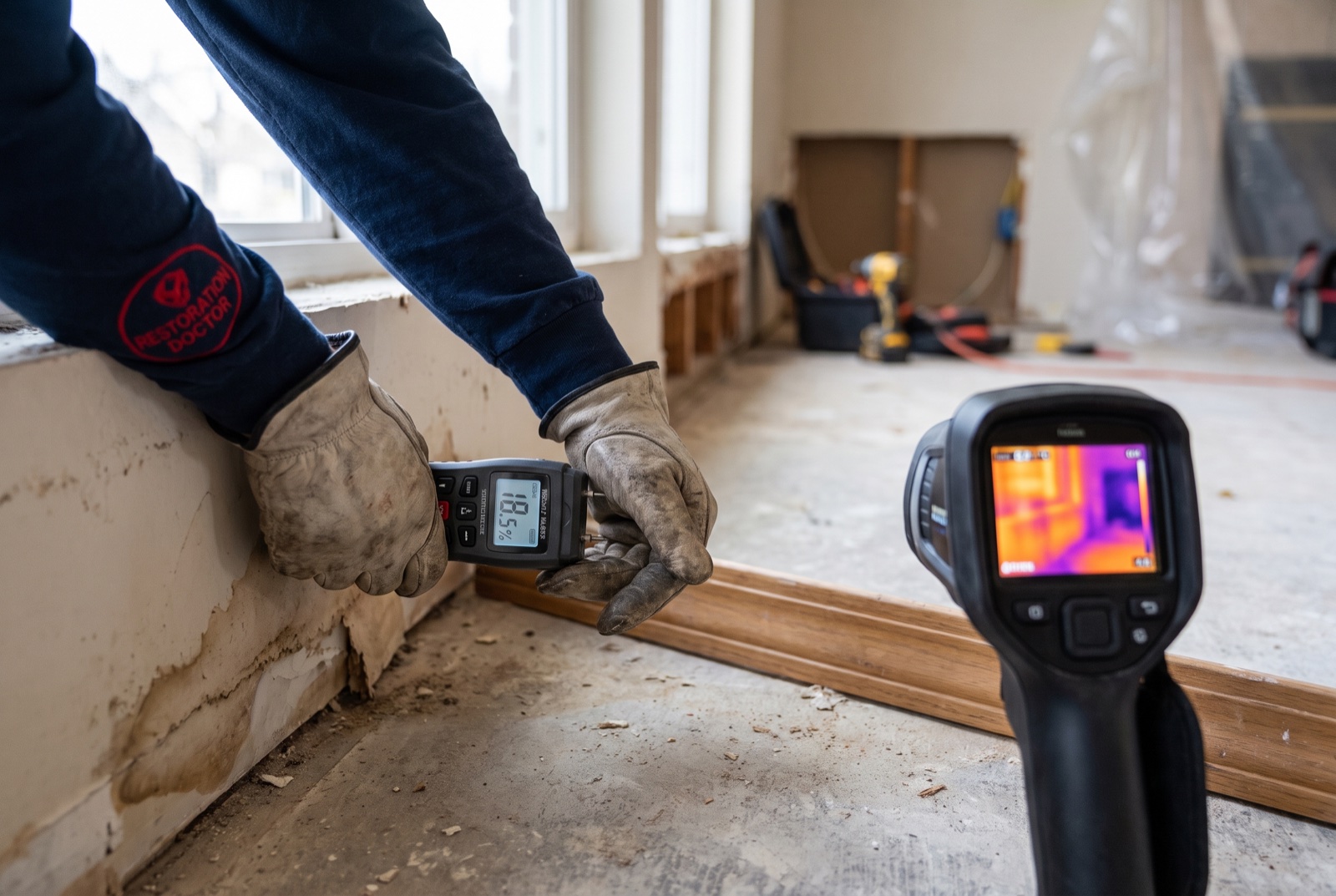
This is a designated historic district, and that changes the work. Original heart-pine floors, plaster-and-lath walls, single-wall board construction, and decades-old cabinetry are exactly the materials a careless dry-out ruins. Our approach is to save what can be saved: extract fast, map moisture behind and beneath the old assemblies with meters and thermal imaging, and dry in place wherever the material and the science allow, rather than demolishing character that cannot be bought back at a lumberyard.
We are the South Florida arm of the multi-state Restoration Doctor operation, working out of a regional operations center at 1200 Brickell Ave, Suite 1950 #1007, Miami, FL 33131. We do not keep a Sailboat Bend street address — our crews drive in. What follows is how age, the river, and the district's rules shape a water loss here.
How we dry Sailboat Bend properties
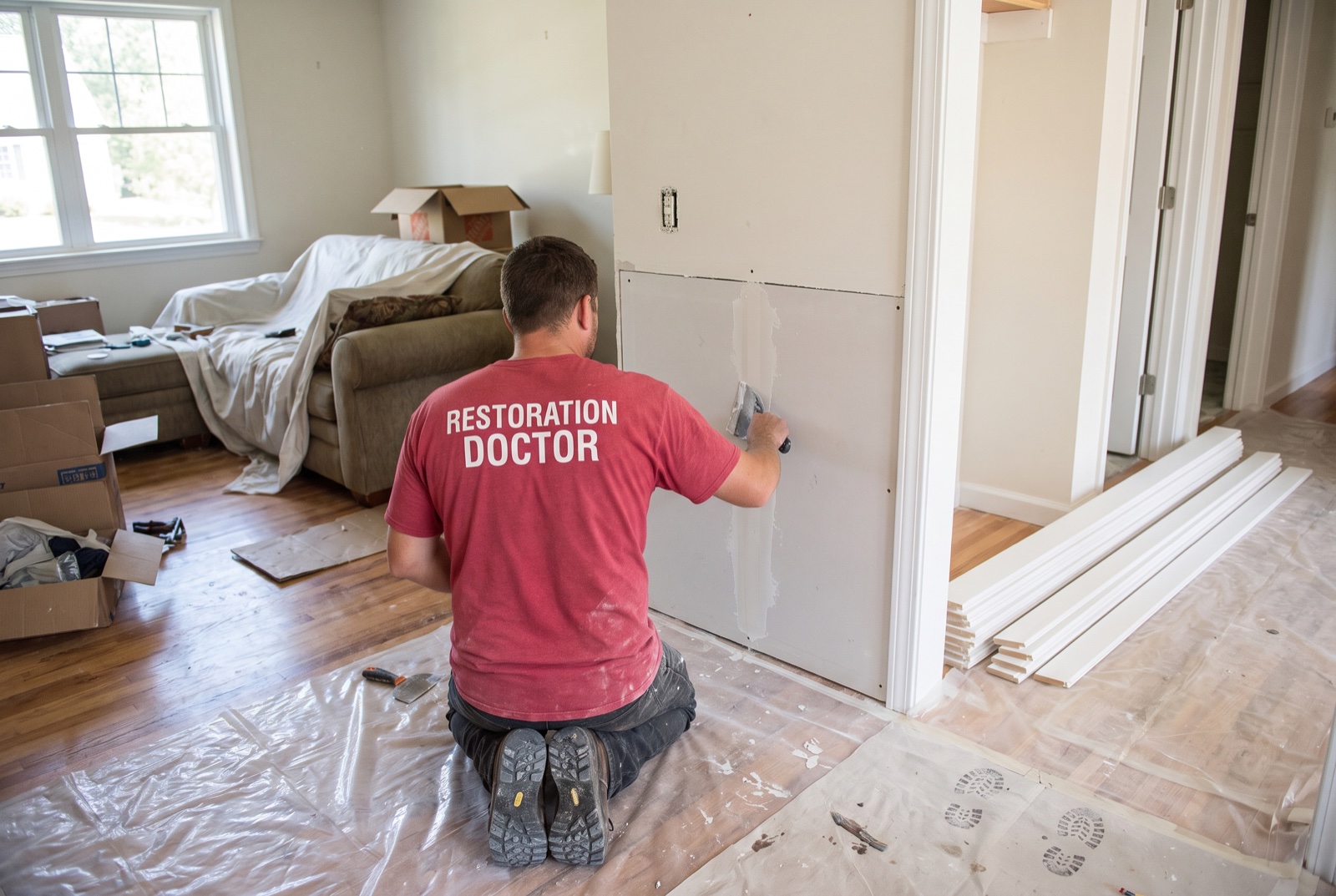
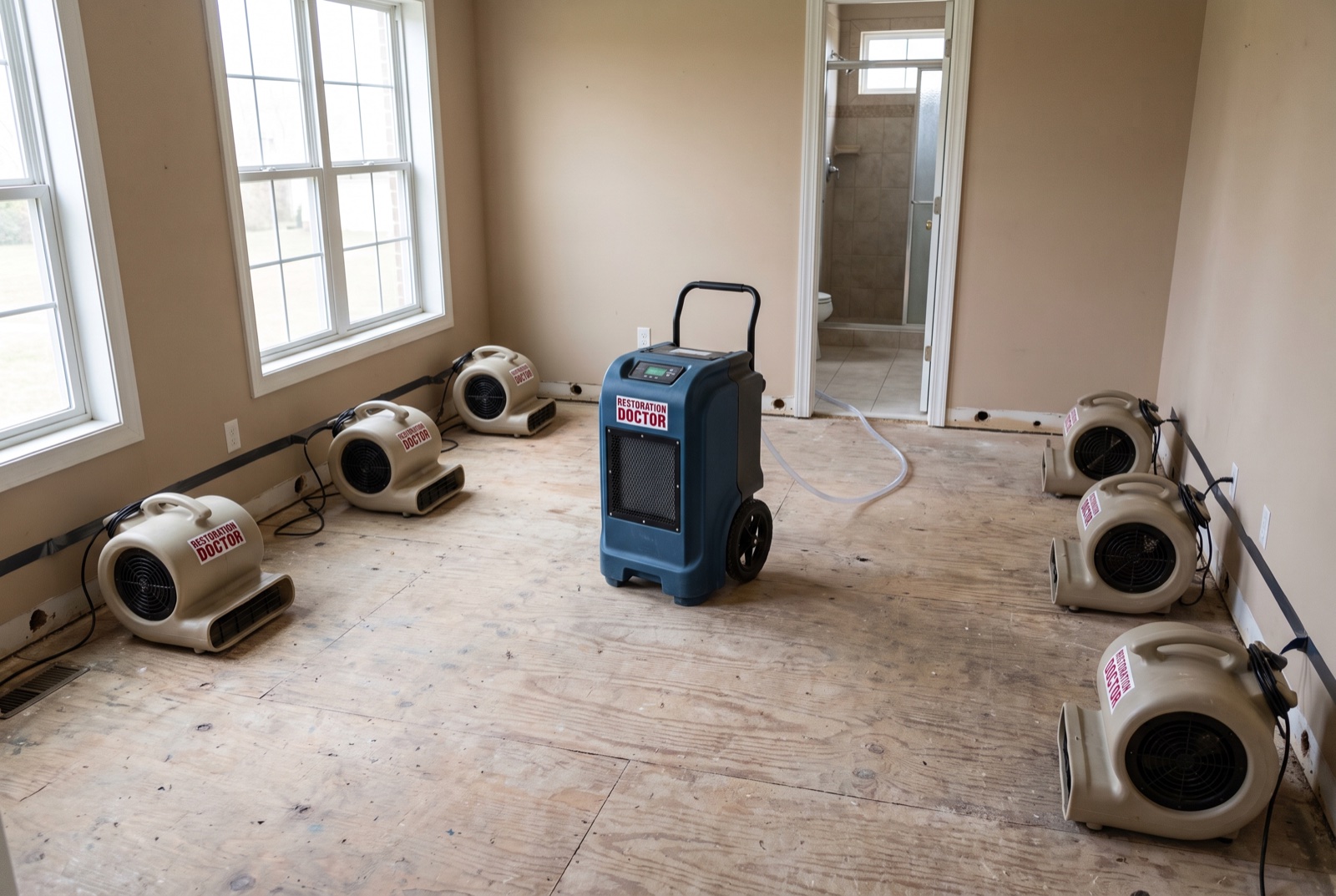
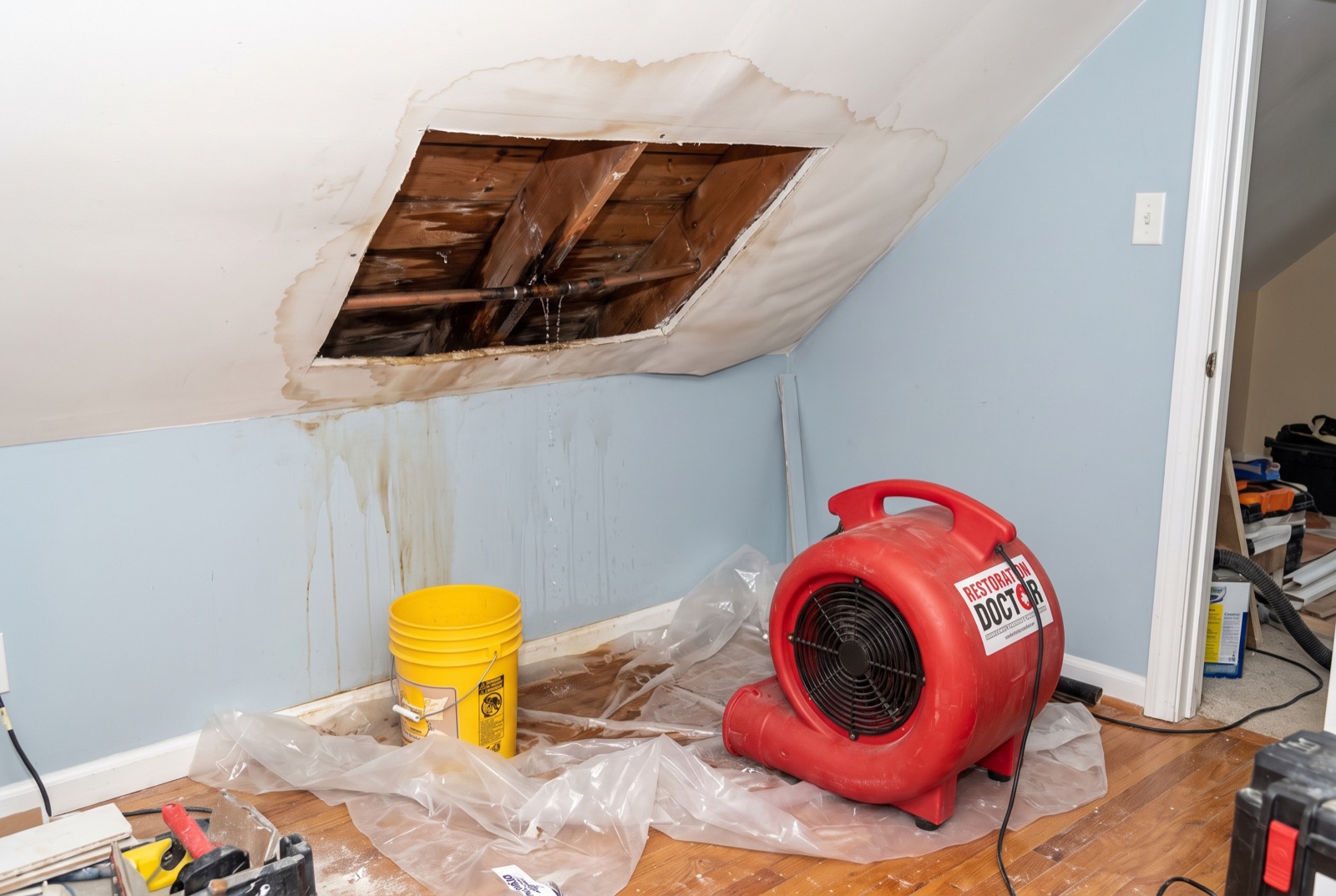
Illustrative views of the equipment and process our crews deploy — extraction, air movers, LGR dehumidification, moisture mapping, and containment.
How water damage behaves in Sailboat Bend
Old wood, plaster, and the case for drying in place
The signature challenge in Sailboat Bend is preserving irreplaceable materials while still drying the structure completely. Under the IICRC S500 standard, clean-water losses in older homes are candidates for in-place drying when moisture is caught early — and the payoff is enormous when the wet material is original heart pine or historic plaster. We build a drying chamber around the affected assembly, pull moisture with LGR dehumidifiers, and verify with meter readings against a dry standard rather than guessing from how the surface looks.
The failure mode we work hardest to avoid is the over-demolition that strips a historic home of exactly the fabric that makes it worth its value. Every removal is a decision made from readings, not reflex. Where a wall or floor can be dried and saved, that is the plan; where salt, contamination, or established saturation has claimed a material, we document why and remove only what the evidence requires.
New River proximity and low-lying ground
Sailboat Bend wraps the bend of the New River, and the larger homes sit directly on that frontage. River-adjacent, low-lying ground means this neighborhood floods in heavy rain — residents describe standing water in serious storm events — and river or street water that enters a home is treated as contaminated under S500, not as clean water. That reclassification drives everything: extraction, removal of unsalvageable porous materials, antimicrobial treatment, and verification, instead of fans alone.
Because so much of the housing predates modern flood-resistant construction, grade-level intrusion reaches vulnerable original materials fast. We photograph and log the water's entry path from the first walkthrough, both because South Florida heat starts a microbial clock within days and because a careful record of how the water entered matters to how the loss is understood later.
Heat, humidity, and the microbial clock in an old envelope
An old wood-and-plaster house in South Florida humidity is an unforgiving place to leave moisture sitting. Wall cavities without modern drainage hold water against organic materials, and in this climate saturated framing and plaster can begin supporting mold growth within a few days. Speed is the single biggest factor in whether a Sailboat Bend home needs remediation at all.
When drying does reveal established growth, we remediate under the IICRC S520 standard with proper containment, controlled removal, and post-work verification. One thing we say plainly to every homeowner: you choose your restoration contractor, and emergency mitigation to stop your home from getting worse is your call to make as the property owner. We begin when you authorize the work and build the documentation your claim will rely on from the first hour.
Sailboat Bend homes and how they fail
Sailboat Bend's housing is dominated by small, one-story vernacular residences — Bungalow, Mission, and Mediterranean Revival cottages — with a scattering of larger homes along the New River frontage. Many were built before modern building codes, before slab-on-grade was universal, and before anyone imagined a moisture meter. You find raised wood floors over crawl-adjacent framing, plaster on wood lath, and wall cavities with none of the drainage or drying paths a contemporary wall offers. Water tracks through those old assemblies in ways a newer home never would.
That age is the whole story of drying here. Wet plaster does not behave like wet drywall; it holds water differently and can be saved or lost depending on how fast and how gently it is dried. Original wood flooring can cup and crown, but with early extraction and controlled drying it often stabilizes rather than requiring replacement. Because this is a protected historic district, demolition and material changes can carry review requirements, which is one more reason our default is to dry and preserve first and remove only what genuinely cannot be recovered.
The infill picture matters too. Alongside the historic cottages sit renovated homes, converted duplexes, and a handful of newer builds that maxed out their lots. Two houses on the same block can have completely different envelopes — one original single-wall frame, one modern block-and-slab — and a single event, whether a roof leak or river-driven flooding, leaves a very different wet footprint in each. We scope each structure for what it actually is instead of assuming a neighborhood-wide template.
Sailboat Bend neighborhoods we serve
Real Broward County communities — and the water losses we most often see in each.
The larger riverfront homes at the bend — first to see river-driven flooding, handled as contaminated-water losses.
Small early-1900s wood-frame cottages with plaster-and-lath walls that call for gentle in-place drying.
Older single-wall frame homes on low ground where heavy-rain street water reaches original materials quickly.
Mixed historic and renovated structures near downtown; two adjacent homes can have completely different wet footprints.
Downtown-bordering blocks where infill new builds sit beside protected historic cottages.
Full restoration services in Sailboat Bend
One operation covers every category — from emergency mitigation to full reconstruction.
Water Damage Restoration
Extraction, structural drying, and moisture verification for pipe failures, king-tide intrusion, and unit-to-unit leaks in Fort Lauderdale homes, condos, and canal-front properties.
Storm & Hurricane Damage Restoration
Emergency board-up, tarping, storm-surge and flood extraction, and post-hurricane structural drying for homes, canal properties, and condo towers across Fort Lauderdale and Broward County.
Mold Remediation
S520-based mold remediation: containment, HEPA-filtered removal, moisture-source correction, and post-remediation verification for Fort Lauderdale homes, condos, and waterfront properties.
Sewage Cleanup
Category 3 water mitigation: sewage extraction, contaminated material removal, disinfection, and structural drying for backups, drain failures, and tidal surcharge in Broward County.
Fire & Smoke Damage Restoration
Structure securing, soot and smoke residue removal, odor treatment, and combined fire-and-water mitigation for Fort Lauderdale and Broward County properties.
Contents Restoration & Pack-Out
Full-chain contents handling for Broward County: barcode-tracked inventory, pack-out, restoration cleaning, climate-controlled storage, and organized pack-back.
What Sailboat Bend homeowners look for
Sailboat Bend homeowners are stewards of the oldest houses in Fort Lauderdale, and they are careful about who touches them — rightly wary of a contractor who would rip out original material to save an afternoon. We would rather earn that trust with verifiable outside proof than with a rating typed onto our own page.
Our verified customer reviews for the Restoration Doctor operation live on a dedicated hub at RestorationDoctorsReviews.com, linked to the genuine Google source. Read them, then call (786) 213-9489 when water reaches your historic home.
Frequently asked
Active water, mold, fire, or sewage event?
Connect directly with the Restoration Doctor team for your region. Crews are on standby 24/7 with documented response protocols.