Water Damage Restoration in Imperial Point, Fort Lauderdale
Water damage restoration Imperial Point Fort Lauderdale service centers on a very specific kind of house: the mid-century single-family home. Imperial Point is a planned neighborhood of roughly 1,470 mostly single-family residences on the north end of Fort Lauderdale, just west of Federal Highway, developed in the 1960s and early 1970s by the Haft-Gaines Corporation. Homes of that era share a common set of water vulnerabilities — original or first-generation plumbing, mid-century roof assemblies, and slab-on-grade construction — and Restoration Doctor of Miami scopes each loss for the age of the systems, not just the visible damage. We answer around the clock at (786) 213-9489.
The neighborhood is overwhelmingly single-story, medium-sized homes between about 1,200 and 2,900 square feet, with a handful of small condo buildings mixed in and a corner of finger-canal homes with docks. That consistency is useful: the losses here follow recognizable patterns, from a failed 1960s galvanized or copper supply line to a flat- or low-slope roof that lets storm rain in. We treat those patterns as a starting point, then map each specific home with instruments.
We serve Imperial Point as the South Florida arm of the multi-state Restoration Doctor organization, dispatching from a regional operations center at 1200 Brickell Ave, Suite 1950 #1007, Miami, FL 33131. We keep no Imperial Point street address — our crews drive to you. Below: aging plumbing, the canal corner, and the storm-and-mold picture.
How we dry Imperial Point properties
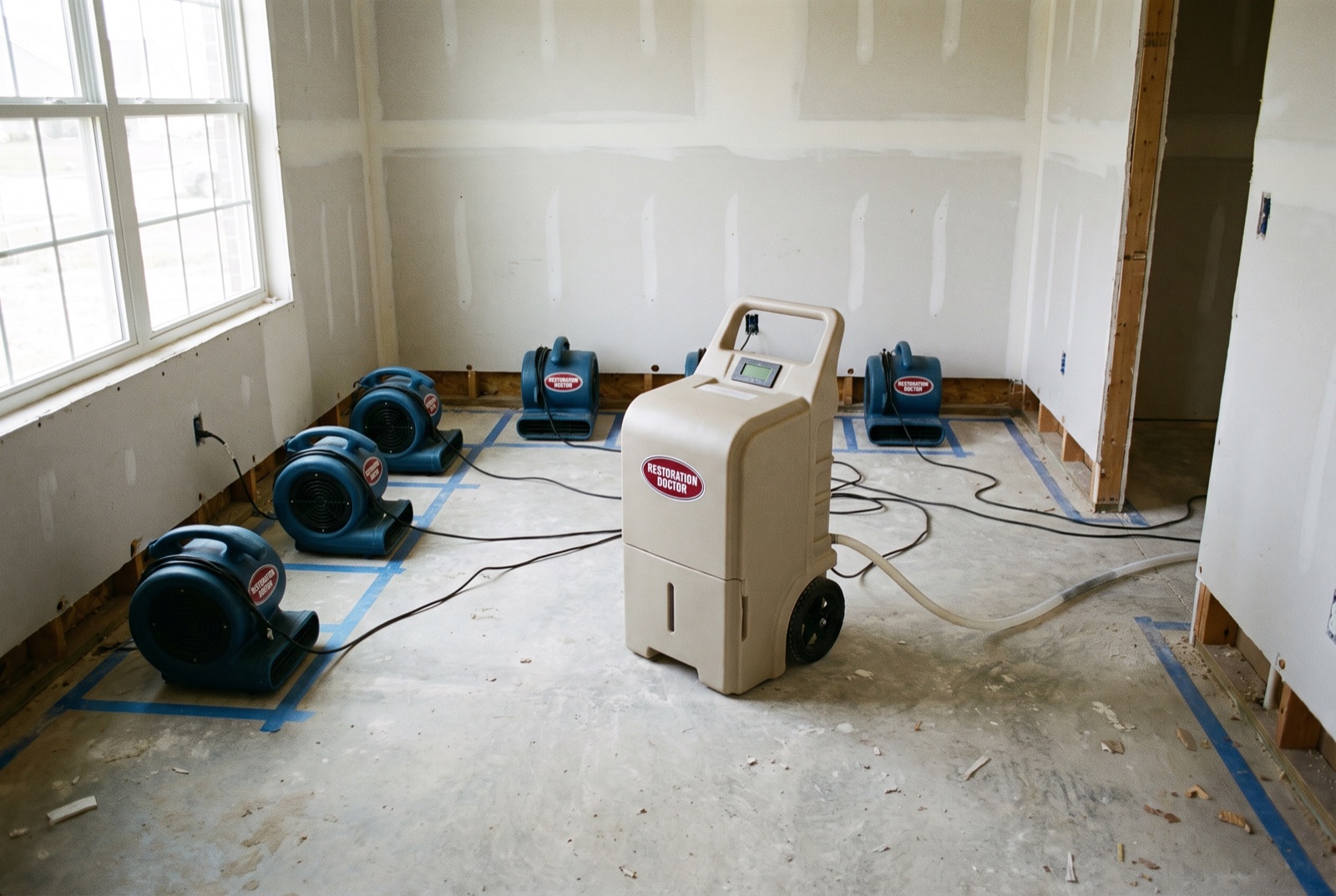
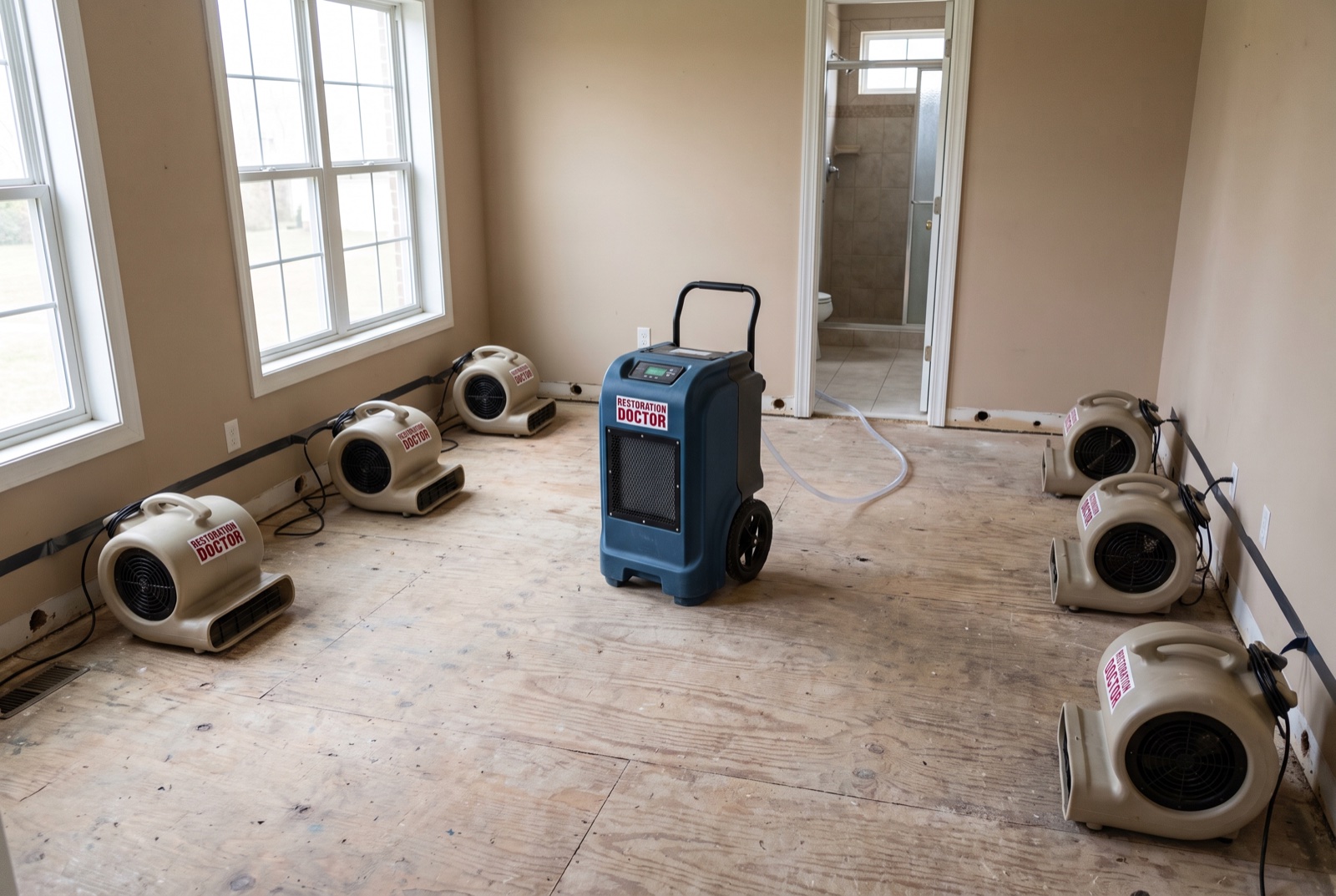
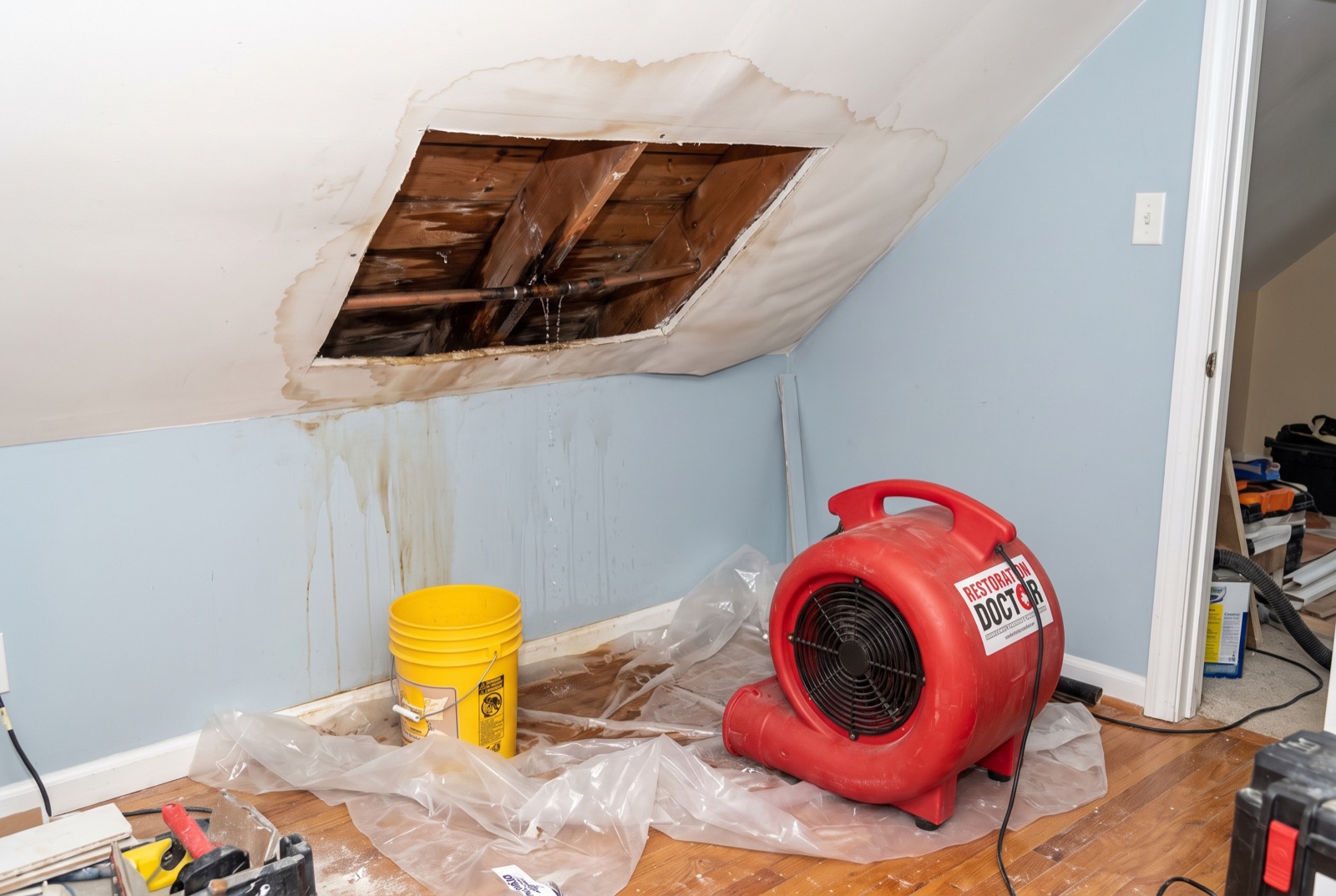
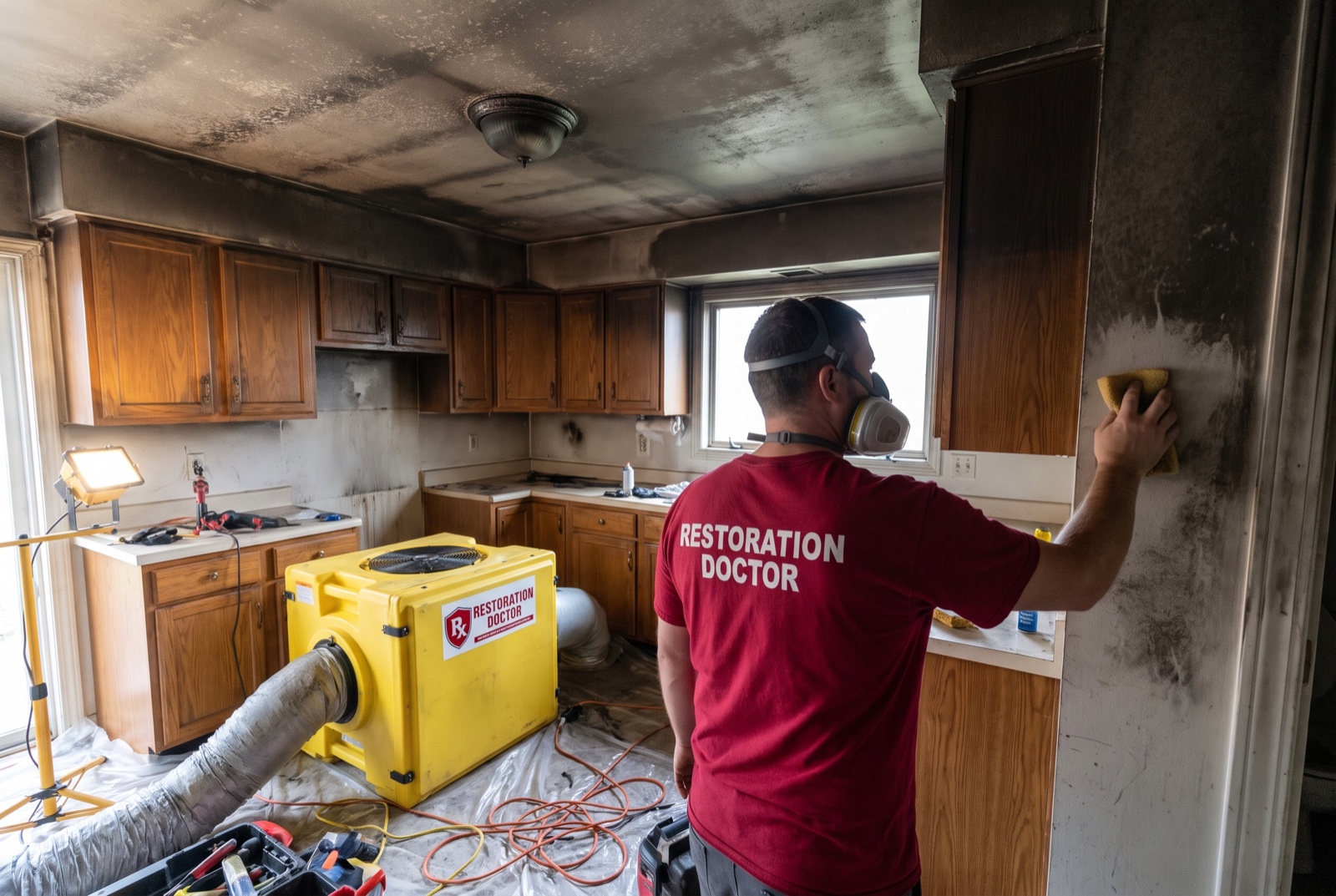
Illustrative views of the equipment and process our crews deploy — extraction, air movers, LGR dehumidification, moisture mapping, and containment.
How water damage behaves in Imperial Point
Aging plumbing in sixty-year-old homes
The most common Imperial Point call is not a hurricane — it is a plumbing failure in an aging home. Original 1960s supply lines, drain lines, and fixtures are well past their design life, and when one lets go it can release clean water that, under the IICRC S500 standard, is straightforward to dry when caught early. The advantage of the neighborhood's slab-on-grade, single-story construction is that we can often dry wall cavities and cabinetry in place with LGR dehumidifiers and targeted airflow rather than resorting to heavy demolition.
Speed still decides the outcome. A supply line that runs overnight saturates baseboards, lower cabinets, and flooring far beyond the puddle you can see. We extract, map the full extent with meters, and set drying equipment on the first visit, then verify against a dry standard before we call it done.
The canal corner and its docks
The northwest corner of Imperial Point holds a small trident of finger canals — a section of waterway giving roughly a hundred-plus households backyard water views and docks for smaller vessels. Those canal-adjacent homes carry a different exposure than the interior lots: high-water and heavy-rain events can push water into low yards, garages, and against thresholds at grade. Canal water that enters a home is contaminated under S500, so it is extracted, treated, and verified, with unsalvageable porous materials removed rather than simply dried.
We document the entry path for these losses specifically, because grade-level canal or street intrusion is handled very differently than a clean interior plumbing break, and the classification drives the whole scope.
Storm rain, mid-century roofs, and the mold clock
When a named storm crosses Broward County, Imperial Point's mid-century roofs and grade-level openings are the vulnerable points. Rain can enter from above through an aging roof assembly or at grade through garage doors and thresholds when drainage is overwhelmed, and storm water entering a home is treated as contaminated. In South Florida heat and humidity, saturated drywall and baseboard can begin supporting mold within a few days, so we move fast on every storm loss.
Where drying reveals established growth, we remediate under the IICRC S520 standard with containment and controlled removal. And to be clear about your rights: you choose your restoration contractor, and emergency mitigation to stop ongoing damage is your call as the property owner. We start when you authorize the work and document the loss thoroughly from the first hour.
Imperial Point homes and how they fail
Imperial Point is defined by its 1960s Haft-Gaines housing stock: open-plan single-story homes, ten original floor models running from two-bedroom to four-bedroom, built with a coastal Mediterranean and Tuscan/Spanish Revival flavor. The near-uniform construction is masonry on concrete slab with terrazzo or tile hard surfaces — the classic South Florida mid-century assembly. There is no basement anywhere in this neighborhood, or anywhere in the region; homes are slab-on-grade, so drying focuses on wall cavities, cabinetry, and flooring over the slab.
Age is the operative risk in these homes. Sixty-year-old supply and drain lines fail, water heaters and fixtures reach end of life, and original wall and floor assemblies were not built with modern moisture management in mind. A supply-line break under a slab-built kitchen or bath wets baseboards, lower cabinetry, and any wood or laminate flooring floated over the slab, tracking farther through the assembly than the visible line suggests. We map that spread with moisture meters and thermal imaging.
The housing is consistent enough that our scopes stay disciplined and predictable, which benefits the homeowner. A mid-century Imperial Point loss is rarely mysterious: we know where water goes in these floor plans, we verify it with instruments, and we dry to a documented dry standard. The small condo buildings and the canal-corner homes are the exceptions we scope individually.
Imperial Point neighborhoods we serve
Real Broward County communities — and the water losses we most often see in each.
Northwest finger-canal homes with docks where grade-level and canal flooding reaches yards and garages first.
Interior 1960s single-family blocks where aging plumbing failures are the most common call.
Mid-century slab-on-grade homes; drying concentrates in wall cavities and cabinetry over the slab.
Original Haft-Gaines floor plans with masonry-and-terrazzo construction and end-of-life supply lines.
Water-adjacent subdivision pocket where high-water events drive grade-level intrusion.
Full restoration services in Imperial Point
One operation covers every category — from emergency mitigation to full reconstruction.
Water Damage Restoration
Extraction, structural drying, and moisture verification for pipe failures, king-tide intrusion, and unit-to-unit leaks in Fort Lauderdale homes, condos, and canal-front properties.
Storm & Hurricane Damage Restoration
Emergency board-up, tarping, storm-surge and flood extraction, and post-hurricane structural drying for homes, canal properties, and condo towers across Fort Lauderdale and Broward County.
Mold Remediation
S520-based mold remediation: containment, HEPA-filtered removal, moisture-source correction, and post-remediation verification for Fort Lauderdale homes, condos, and waterfront properties.
Sewage Cleanup
Category 3 water mitigation: sewage extraction, contaminated material removal, disinfection, and structural drying for backups, drain failures, and tidal surcharge in Broward County.
Fire & Smoke Damage Restoration
Structure securing, soot and smoke residue removal, odor treatment, and combined fire-and-water mitigation for Fort Lauderdale and Broward County properties.
Contents Restoration & Pack-Out
Full-chain contents handling for Broward County: barcode-tracked inventory, pack-out, restoration cleaning, climate-controlled storage, and organized pack-back.
What Imperial Point homeowners look for
Imperial Point is a settled, owner-occupied neighborhood where people compare notes over the fence, and they trust a neighbor's real experience far more than a star rating a contractor typed onto its own website.
That is why ours are independent: verified customer reviews for the Restoration Doctor operation live on a dedicated hub at RestorationDoctorsReviews.com, linked to the genuine Google source. Check them, then call (786) 213-9489 when water gets into your home.
Frequently asked
Active water, mold, fire, or sewage event?
Connect directly with the Restoration Doctor team for your region. Crews are on standby 24/7 with documented response protocols.