
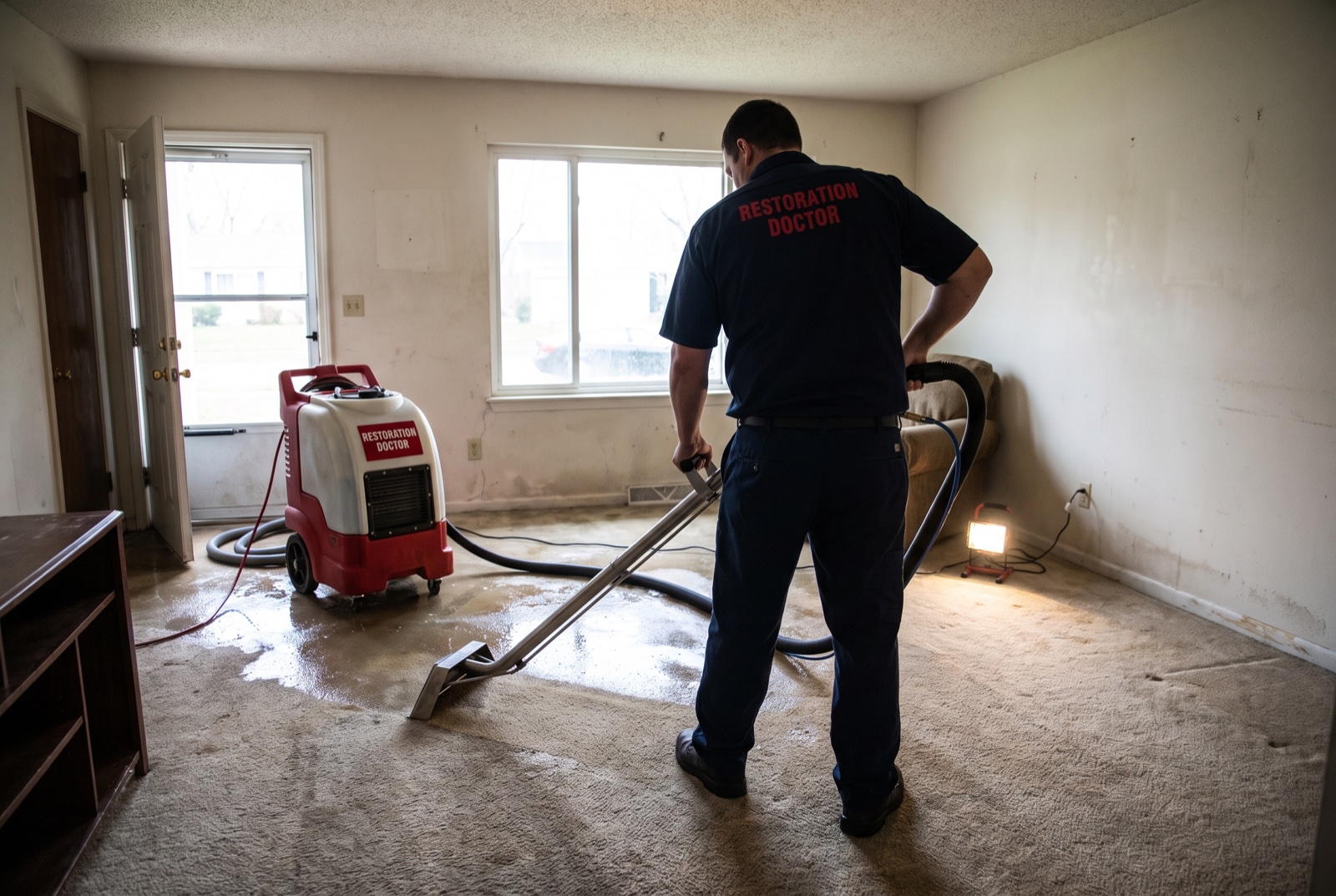
Water Damage Restoration in the Las Olas Isles, Fort Lauderdale
Water damage restoration Las Olas Isles Fort Lauderdale homeowners search for is, more than anywhere else in the city, a question about the seawall. The Isles are the postcard version of the Venice of America: roughly two dozen finger canals cut in the 1920s, homes lined up along the water with private dockage and no fixed bridges to the ocean, and a waterline that sits close enough to the living level that tide, not just plumbing, is a genuine source of loss. Restoration Doctor of Miami responds to Isles emergencies 24/7 at (786) 213-9489.
The finger-isle geometry is the whole story. Each home sits on a narrow peninsula between two canals, hemmed by a seawall that was often built decades ago to a standard lower than today's tides demand. That means a Las Olas Isles house can be entirely dry inside and still be threatened from the yard by a king tide on a cloudless afternoon. When the water does get in, it is brackish canal water — a contaminated-water problem, not a clean one — and it has to be handled accordingly.
We run South Florida operations for the multi-state Restoration Doctor organization out of 1200 Brickell Ave, Suite 1950 #1007, Miami, FL 33131. We hold no Isles street address; we come to the dock. Here is how tide, seawall, and canal water drive restoration on the finger isles.
How we dry Las Olas Isles properties
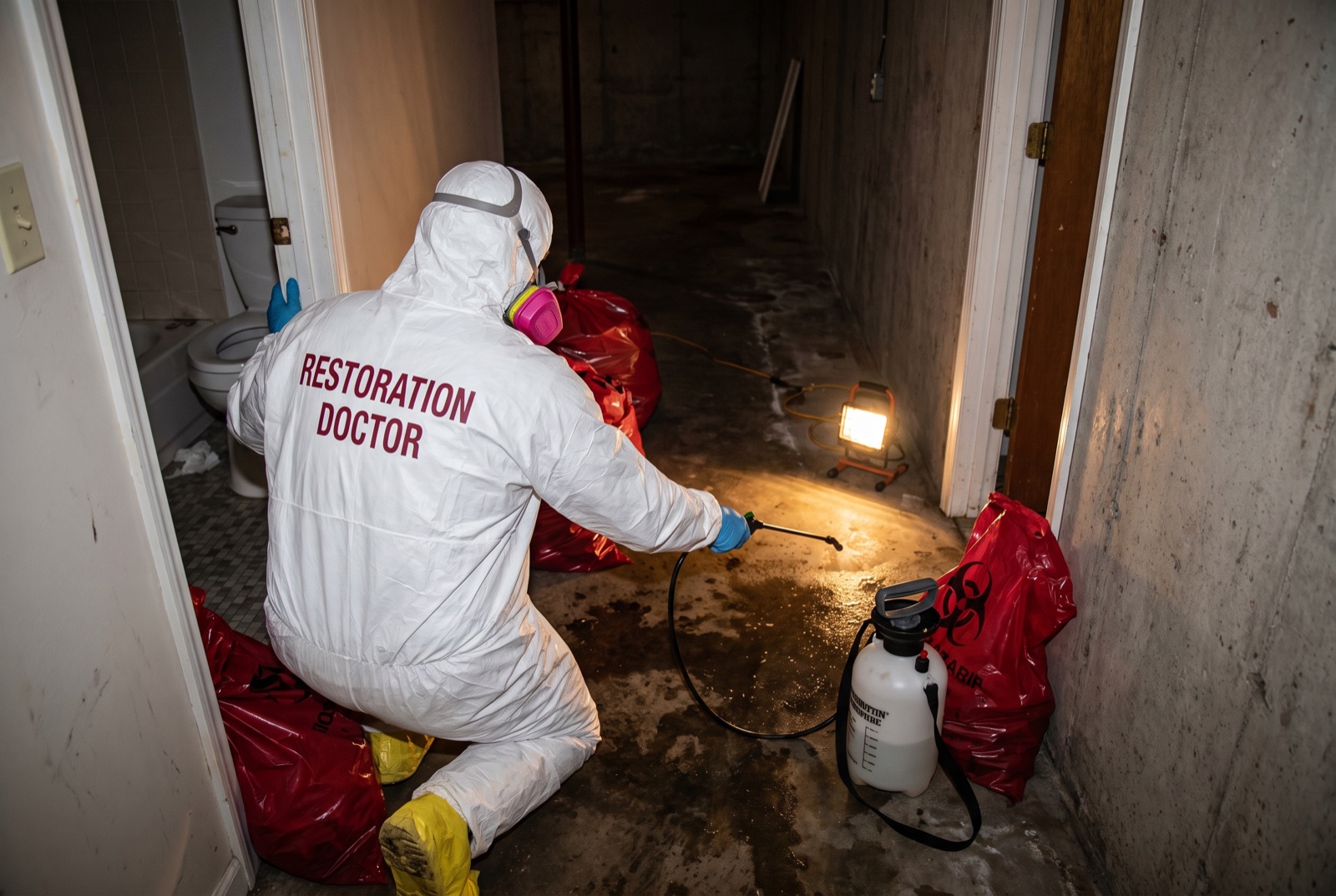
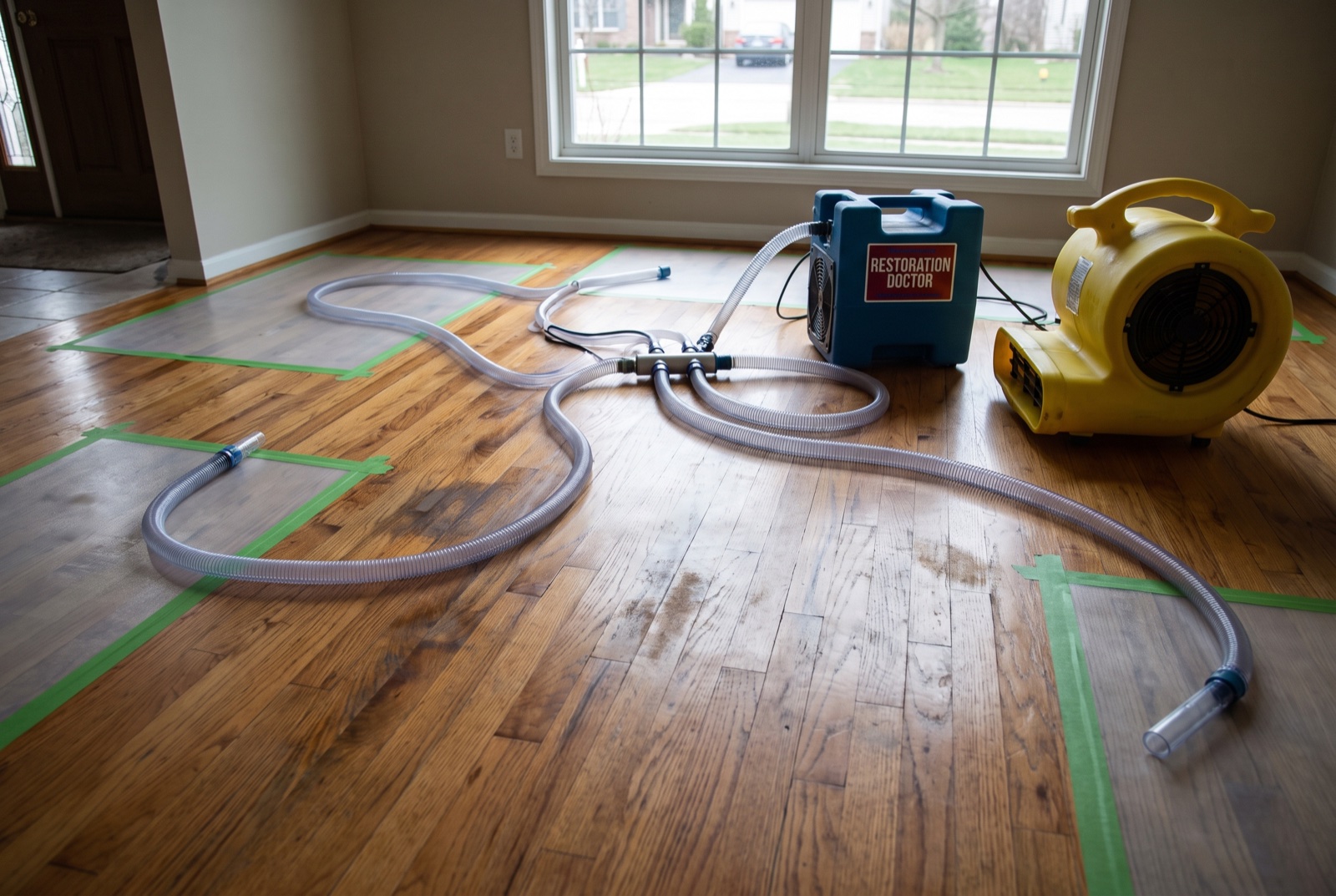
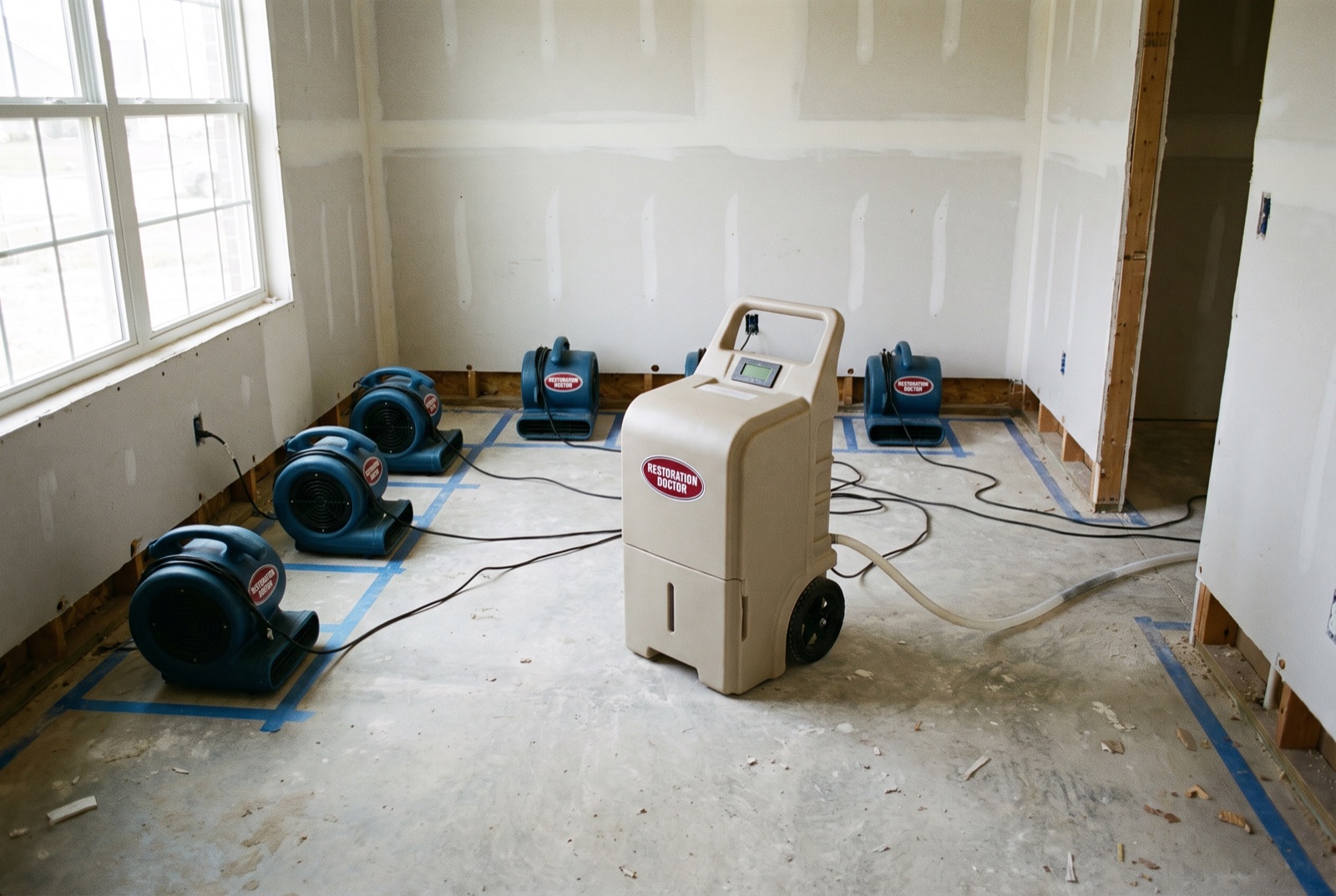
Illustrative views of the equipment and process our crews deploy — extraction, air movers, LGR dehumidification, moisture mapping, and containment.
How water damage behaves in Las Olas Isles
King tides over an aging seawall
The defining Las Olas Isles loss is sunny-day tidal flooding. Each autumn the king tides push canal water up against — and increasingly over — seawalls built to a lower era's standard, putting brackish water across yards, into garages, and against thresholds with no storm anywhere in sight. Under the IICRC S500 standard, that brackish canal water is contaminated: it calls for extraction, disposal of unsalvageable porous materials, and antimicrobial treatment, not fans and patience.
Salt is what makes it stubborn. Chlorides left in slabs, wall bases, and metal fasteners keep pulling moisture and corroding hardware long after the surface reads dry, so a tidal loss is flushed, cleaned, and verified differently than a freshwater pipe break. We document salinity-exposed materials specifically, because the right scope for a canal-water intrusion removes what salt has already claimed rather than trusting a dry surface.
Storm surge, rain, and the two-directional loss
When a named storm crosses Broward County, an Isles home can flood from opposite directions at once: wind opens the roof or a slider and rain enters from above while surge and canal rise push in from the seawall below. Post-storm wind-versus-water disputes between property carriers and flood programs are a familiar reality in Florida, and the homeowner's best defense is contemporaneous documentation. We photograph and log each intrusion path separately, from first walkthrough through dry-down, so the record shows exactly what entered where.
Tidal and surge flooding also sit outside most standard homeowner policies. Rising water is generally excluded and addressed by separate flood coverage, commonly through the NFIP. Policies vary and we make no coverage promises — but we document the water's entry path in careful detail, because that classification is decided from evidence and it shapes how the claim is handled.
Speed, mold, and the homeowner's call
On the isles the drying clock is short. In South Florida heat, saturated drywall and baseboard behind a seawall can begin supporting microbial growth within days, so we start extraction and structural drying immediately and monitor to defined targets. Where growth is already established, we remediate under the IICRC S520 standard with proper containment and controlled removal.
And the decision to begin is yours. As the property owner you choose your restoration contractor, and emergency mitigation to stop ongoing damage is your right — you do not need anyone's pre-approval to keep your home from getting worse. We begin the moment you authorize us and build the documentation your claim will lean on.
Las Olas Isles homes and how they fail
The Isles carry a striking contrast on the same block. Original 1950s and 1960s single-story canal homes — terrazzo or tile over slab, replaced windows, low freeboard — sit beside brand-new three-story contemporary estates that maxed out identical lots, with sub-groupings like Nurmi Isles and the Seven Isles setting the tone for the high end. A canal that overtops its seawall does not care which it reaches first; what differs is what the water can ruin. In the low-slung mid-century home it can be the entire living level. In the tall new build it is more often the ground-floor garage, elevator pit, and mechanical room.
Because nearly every home here is deep-water dockage with direct ocean access, the ground-level spaces closest to the seawall — boathouses, summer kitchens, garages, and lower mechanical rooms — are the recurring wet zones. The prevailing floor construction is hard surface over concrete slab, so our drying work targets wall cavities, cabinetry, doors, and any wood flooring floated over the slab, verified with meters and thermal imaging rather than read off the visible waterline. On the isles we also pay particular attention to the seawall-facing wall of the structure, where salt-laden water lands first.
Las Olas Isles neighborhoods we serve
Real Broward County communities — and the water losses we most often see in each.
Deep-water island streets north of Las Olas Blvd where king tides test seawalls on low-freeboard lots.
Prestige finger canals of large estates; brackish intrusion at ground level handled as contaminated loss.
Classic finger isles mixing 1950s canal homes with tall new builds on the same block.
Interior isle street where garages and mechanical rooms take tidal water first.
Bridge-and-canal edge where storm surge and rain can arrive from above and below together.
Full restoration services in Las Olas Isles
One operation covers every category — from emergency mitigation to full reconstruction.
Water Damage Restoration
Extraction, structural drying, and moisture verification for pipe failures, king-tide intrusion, and unit-to-unit leaks in Fort Lauderdale homes, condos, and canal-front properties.
Storm & Hurricane Damage Restoration
Emergency board-up, tarping, storm-surge and flood extraction, and post-hurricane structural drying for homes, canal properties, and condo towers across Fort Lauderdale and Broward County.
Mold Remediation
S520-based mold remediation: containment, HEPA-filtered removal, moisture-source correction, and post-remediation verification for Fort Lauderdale homes, condos, and waterfront properties.
Sewage Cleanup
Category 3 water mitigation: sewage extraction, contaminated material removal, disinfection, and structural drying for backups, drain failures, and tidal surcharge in Broward County.
Fire & Smoke Damage Restoration
Structure securing, soot and smoke residue removal, odor treatment, and combined fire-and-water mitigation for Fort Lauderdale and Broward County properties.
Contents Restoration & Pack-Out
Full-chain contents handling for Broward County: barcode-tracked inventory, pack-out, restoration cleaning, climate-controlled storage, and organized pack-back.
What Las Olas Isles homeowners look for
Isles owners have watched every storm-chasing logo roll down Las Olas after a bad tide, and they are right to distrust ratings a company types about itself. Ours are not self-reported: verified customer reviews for the Restoration Doctor operation are hosted at RestorationDoctorsReviews.com, linked to the genuine Google source rather than pasted onto this page.
Judge the record yourself, then call (786) 213-9489 when the canal comes over your seawall.
Frequently asked
Active water, mold, fire, or sewage event?
Connect directly with the Restoration Doctor team for your region. Crews are on standby 24/7 with documented response protocols.