Hurricane Season Prep for Fort Lauderdale Homeowners: The Complete Pre-Storm and Post-Storm Playbook
BY RESTORATION DOCTOR OF MIAMI · MIAMI-DADE, BROWARD & PALM BEACH
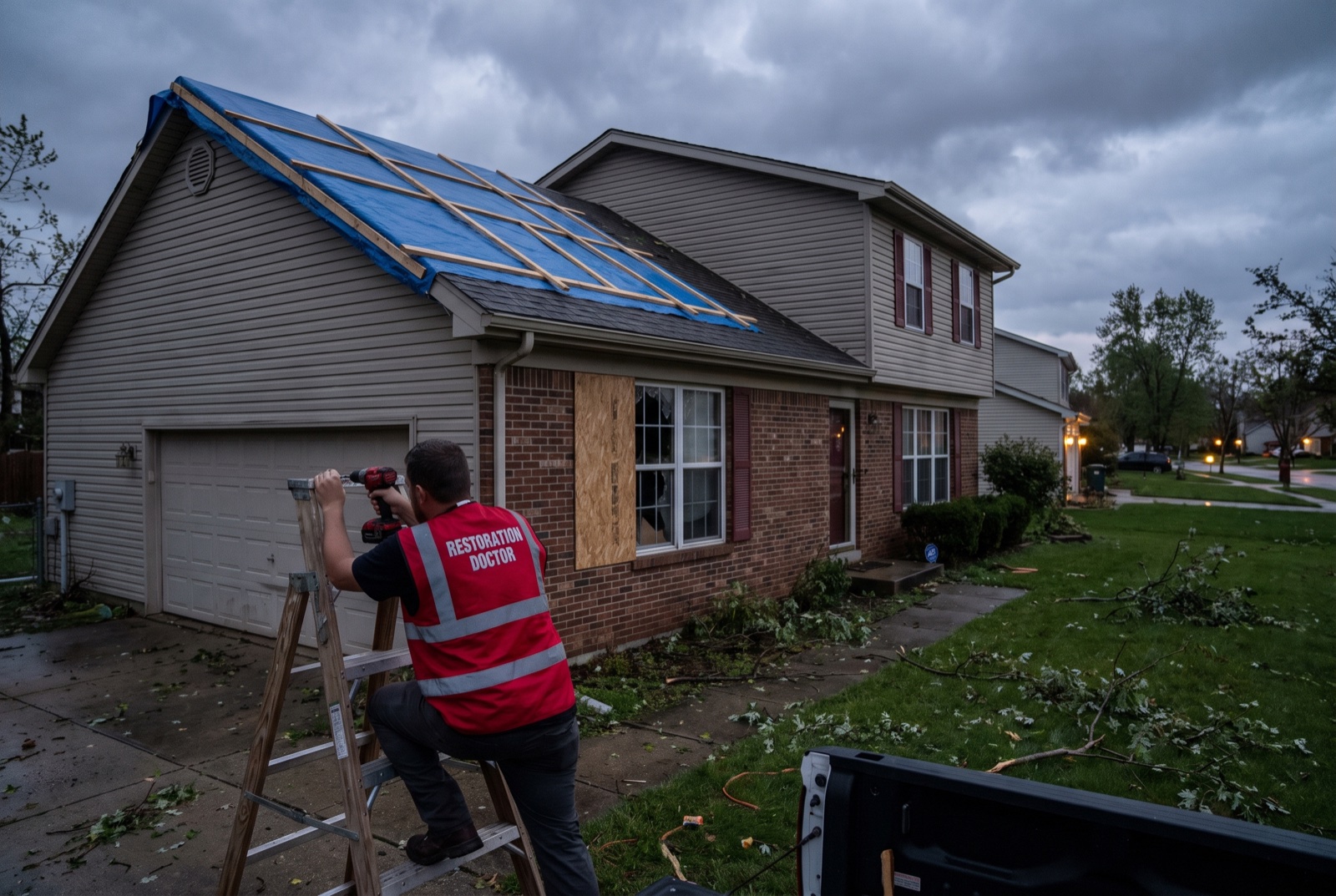
Hurricane season prep Fort Lauderdale homeowners can actually use comes down to four things: document the house on video before anything happens, close the water-entry failure points that actually leak (garage doors, sliders, soffits, roof edges, AC line penetrations), run a disciplined 72/48/24-hour countdown before landfall, and understand that in our 85°F, 80%-humidity air a wet building can begin growing mold in roughly 24 to 48 hours. After the storm, photograph everything before you move it, keep the AC off in a wet building, and hire a licensed, IICRC-credentialed restoration contractor on a written scope — never a blank assignment of benefits.
Call (786) 213-9489When does hurricane season actually matter in Fort Lauderdale?
Hurricane season prep Fort Lauderdale homeowners take seriously starts long before a cone shows up on the news. The Atlantic season runs June 1 through November 30, but the calendar is not evenly weighted. Early-season systems tend to be disorganized and rain-heavy; the storms that reorganize the coastline are overwhelmingly September and October events, when sea-surface temperatures peak and the steering patterns favor tracks that put South Florida on the map. That means the useful preparation window in Broward is April through July — while shutter hardware is in stock, roofers still answer the phone, and your insurer will still write or amend a policy. Once a named storm is in the basin, most carriers stop binding new coverage and every hardware store within twenty miles is out of plywood, sandbags, and gas cans.
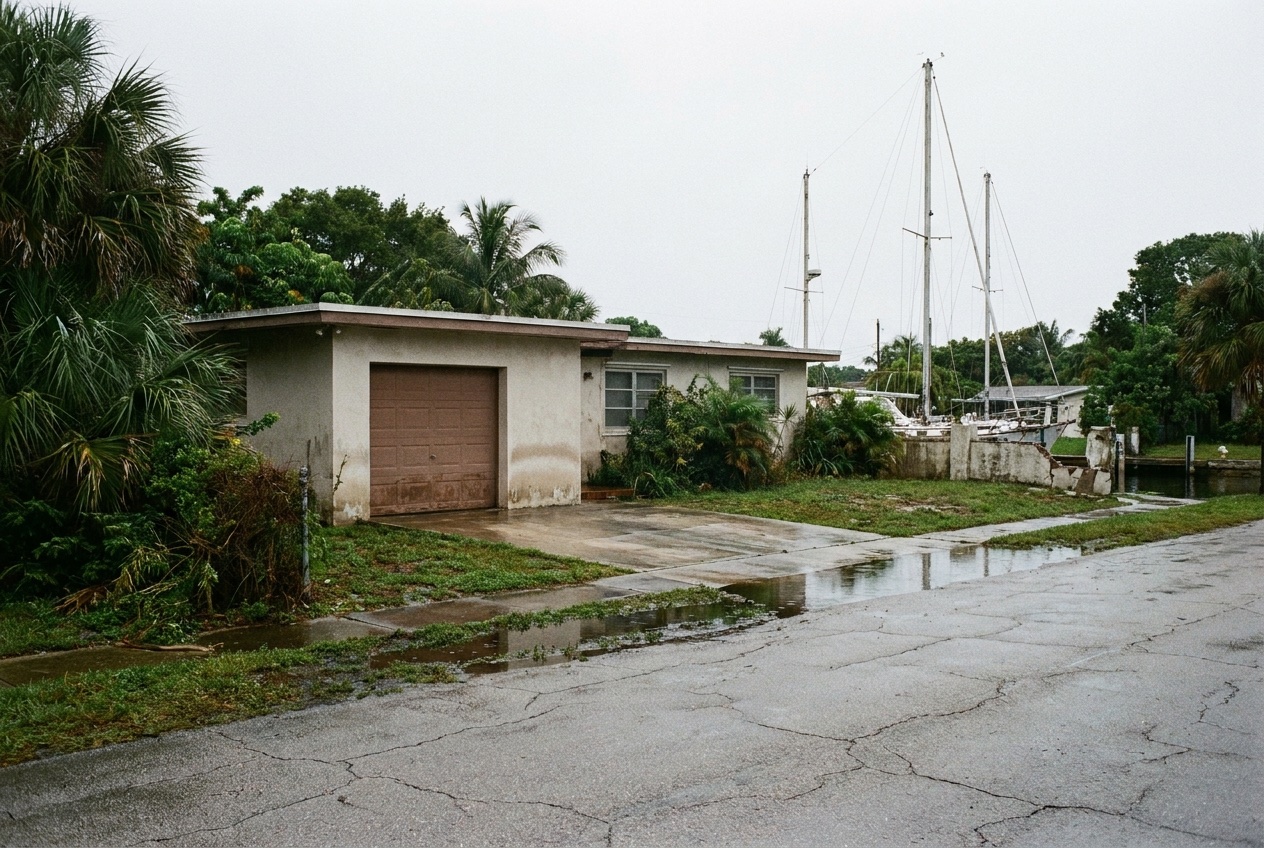
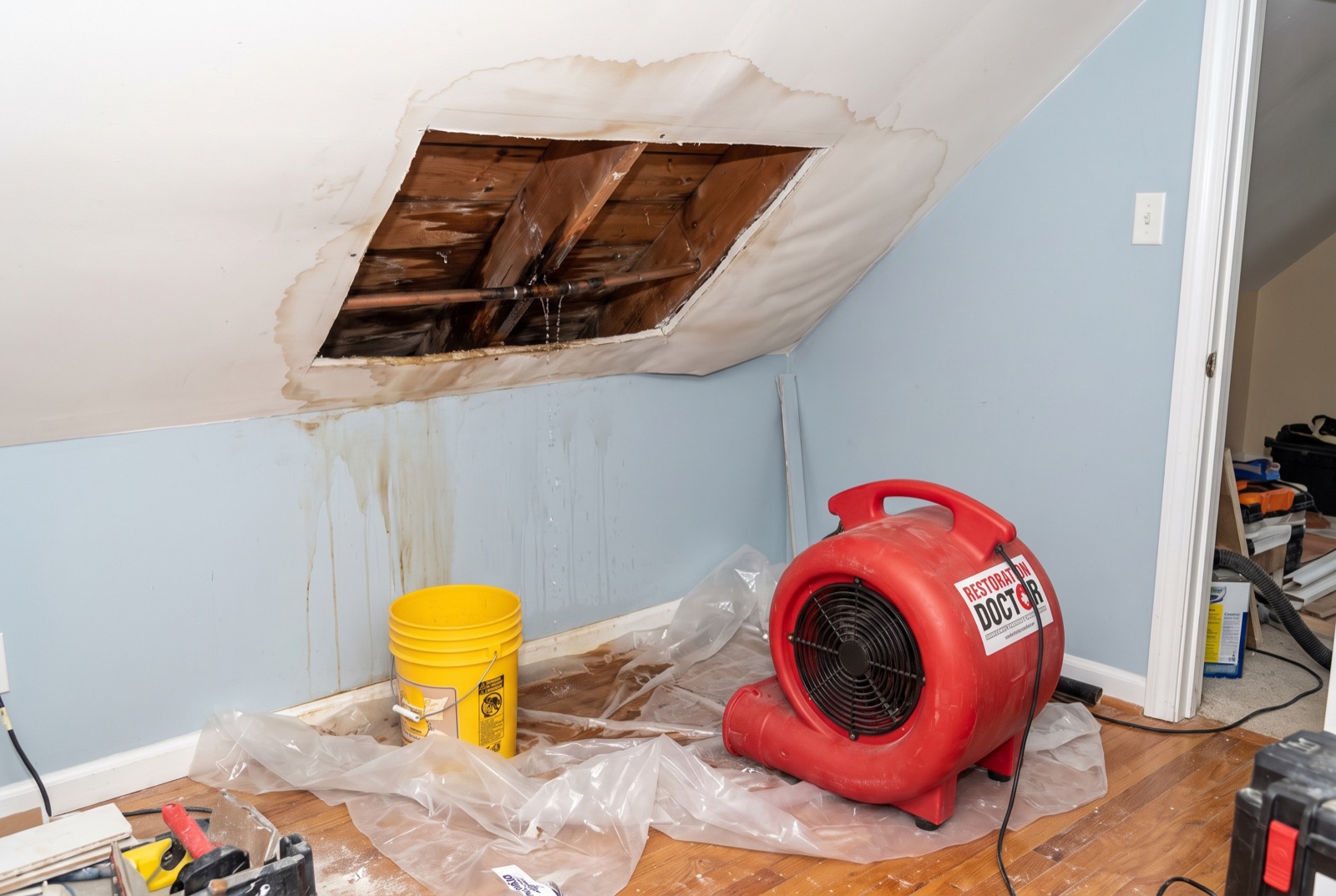
The second thing Fort Lauderdale homeowners should internalize is that our losses are usually not glamorous. Total roof failures make the news, but the calls that fill a restoration schedule for weeks after a storm are quieter: water that came through a garage door that flexed under pressure, a slider that leaked around a worn seal, rain that entered through a soffit and traveled inside a wall, a flat-roof edge that lifted just enough. The house looks fine from the street. Inside, the drywall is wet three feet up and nobody notices for two days.
So think about preparation in two categories at once. Wind hardening protects the structure. Water strategy protects everything you actually live with — flooring, cabinets, drywall, contents, and the indoor air you will be breathing next month. In this climate, the second one is where most of the money is.
What is the difference between storm surge, wind-driven rain, and street flooding?
These three get lumped together as 'flooding' in conversation, and that conflation costs Broward homeowners real money. They are physically different events, they damage a house differently, and they are handled under different insurance products. Knowing which one hit your home — and being able to prove it with photographs — is one of the most valuable things you can do for yourself.
Storm surge is ocean water pushed inland by the storm's wind field. It is the dominant risk for the barrier-island and waterfront areas — Harbor Beach, the Las Olas Isles, Lauderdale-by-the-Sea, the seawall lots along the finger canals. It is salt water, it is contaminated, it arrives fast, and it typically enters at grade. Wind-driven rain is fresh water forced horizontally through envelope openings — around windows, through failed seals, under lifted roofing, through soffits and vents. It can soak an interior in a home that never saw a drop of standing water outside. Street and stormwater flooding is the inland problem: rainfall that outruns the drainage system and rises into homes through thresholds, garage slabs, and low openings. Inland Fort Lauderdale neighborhoods like Victoria Park, Lake Ridge, Plantation, and Oakland Park see far more of this than they see surge.
The insurance distinction matters enormously. Water that enters because wind created an opening is generally addressed under a homeowners policy. Rising water — surge, stormwater, overwhelmed drainage — is generally excluded from a homeowners policy and covered separately, commonly through NFIP flood coverage. Policies vary and we make no coverage promises on anyone's behalf; the point is that the classification is decided from evidence. Photographs of the water line, the point of entry, and the exterior damage that caused it are the evidence. Take them.
| Water source | How it enters | Typical Broward exposure | IICRC water category | Usually addressed under |
|---|---|---|---|---|
| Storm surge | Ocean water pushed inland, enters at grade | Barrier island, Harbor Beach, Las Olas Isles, canal-front seawall lots | Category 3 (contaminated) | Separate flood coverage |
| Wind-driven rain | Horizontally through envelope openings, roof edges, soffits, seals | Any home, any elevation — often the invisible loss | Category 1 or 2, degrading with time and materials contacted | Homeowners policy, when wind created the opening |
| Street / stormwater flooding | Rising water through thresholds, garage slabs, low openings | Inland lower-lying blocks — Victoria Park, Lake Ridge, Plantation, Oakland Park | Category 3 (contaminated) | Separate flood coverage |
Why should I document my house before the storm?
The single highest-value hour of hurricane season prep has nothing to do with plywood. It is walking your home with your phone, on video, room by room, narrating what you see, before anything happens. After a storm, the burden of showing what was damaged and what condition it was in falls on you. A pre-storm record removes the argument entirely.
Do it properly and it takes less than an hour. Walk each room slowly with video running. Open closets, cabinets, and the pantry. Pan across flooring and ceilings. Then go back with stills for the things that carry value: appliances and electronics with model and serial numbers visible, artwork, furniture, tools, the contents of the garage. Photograph the exterior on all four elevations, the roof from the ground, the seawall or dock if you have one, and the AC condenser pad.
Then handle the paperwork, because paper drowns. Photograph or scan your policy declarations page — both homeowners and flood, if you carry them — along with your agent's contact information, your deductible (including any separate hurricane deductible, which in Florida is often a percentage of dwelling value rather than a flat dollar amount), your mortgage information, and any recent roof or plumbing work orders. Store all of it in cloud storage, not just on the phone in your pocket. A phone is a single point of failure in a storm.
- Room-by-room video with narration — closets and cabinets open, floors and ceilings included.
- Stills of serial numbers on appliances, electronics, and high-value contents.
- All four exterior elevations, roof from ground level, AC pad, seawall or dock.
- Declarations pages for homeowners and flood policies, plus deductible amounts and agent contacts.
- Locate and photograph your main water shutoff and electrical panel, and confirm the shutoff actually turns — old valves seize.
- Everything uploaded to cloud storage before the season, not the week of the storm.
Where does water actually get into a Fort Lauderdale home?
Impact glass and accordion shutters get all the attention, and they matter. But in the losses we document across Broward, the openings that let water in are rarely the protected picture window. They are the boring parts of the envelope nobody inspects.
Garage doors are the number one under-appreciated failure point in South Florida. A large door panel under sustained wind pressure flexes, and flexing lets water past the weatherstripping in volume even when the door never fails structurally. If the door does blow in, the pressure change inside the house can push the roof structure from below. Sliding glass doors are second: the track and weep system on a slider is designed for gravity-fed rain, not for horizontally driven water, and a worn seal or a clogged weep hole turns the track into a channel that delivers water directly onto your flooring.
Above that, look at the roof-to-wall connection, the soffits, and the roof edges. Soffit panels are lightweight and they blow out; once they do, wind drives rain straight into the attic and it comes down through ceilings far from the point of entry. On tile roofs, the perimeter and hip courses are where uplift starts. On flat and low-slope roofs — common on Fort Lauderdale mid-century houses and on many condo buildings — the membrane edge and the parapet flashing are the vulnerable detail, and a small edge lift admits an enormous amount of water. Finally, check the small penetrations: refrigerant and condensate lines entering through an exterior wall, exhaust vents, and the sealant around them. These are cheap to reseal in May and expensive to ignore in September.
- Garage door — bracing or a rated door; flexing panels leak even when they hold.
- Sliding doors — inspect seals, clear the weep holes, keep towels and a threshold dam ready.
- Window weep holes — clear them; a blocked weep turns a window frame into a reservoir.
- Soffits and vents — secured panels prevent attic-driven rain intrusion.
- Roof-to-wall and roof edges — tile perimeter courses, flat-roof membrane edges, parapet flashing.
- AC line and condensate penetrations — resealed annually.
- Gutters, scuppers, and area drains — cleared before the season so rainfall has somewhere to go.
How do I protect a slab-on-grade home or a ground-floor condo unit?
Almost nothing in Broward is built over a crawl space. Our homes sit on concrete slabs, which changes the character of a water loss substantially. Water on a slab does not drain away — it spreads laterally and it wicks upward into everything sitting on the concrete: base plates, baseboards, drywall bottom edges, cabinet toe kicks, and the underlayment beneath tile, LVP, or engineered wood. Concrete itself holds moisture and releases it slowly for days, which is why slab-on-grade drying takes proper dehumidification rather than open windows and box fans.
The practical preparation is elevation and interruption. Get anything porous and valuable off the floor — cardboard storage boxes, rugs, the bottom shelf of the garage, electronics on the ground, photo albums, instrument cases. Twelve to eighteen inches of elevation prevents a startling amount of loss. Move vehicles out of a garage that historically takes water. Use sandbags or reusable water-activated barriers at the thresholds and garage opening that have leaked before, and remember that sandbags divert and slow water; they do not seal a house.
Ground-floor condo owners have an additional layer to sort out in advance, and the time to sort it out is now, not after landfall. Find out what your association's master policy covers versus what your individual HO-6 unit policy covers, because the line between building and unit varies by association and by the declarations. Learn who your building's designated restoration vendor is, whether the association has a pre-storm agreement in place, and how the building handles power and elevator restoration. Ground-floor units also inherit water that entered the building elsewhere — through a lobby, a stairwell, or a parking level — so document your own unit thoroughly regardless of where the intrusion started.
What should I do in the 72 hours before landfall?
Once a storm has a Broward-relevant forecast track, the work becomes sequencing. The mistake people make is doing everything at once on the last day, which is exactly when fuel lines are longest, shutter hardware is missing pieces, and every roofer and tree crew is booked. Work the countdown below and you will have the tedious work behind you before conditions deteriorate.
One note on the outdoors: your yard becomes ammunition in a hurricane. Patio furniture, planters, grills, umbrellas, pool equipment covers, kayaks, and trampolines all become projectiles that break the very windows you protected. Everything either comes inside or goes in the pool. And trim overhanging limbs before the season — not the week of the storm, when Broward's debris pickup is already suspended and your pile becomes ammunition too.
How do I handle generators and electrical safety?
Generator carbon monoxide poisoning kills people in Florida after every major storm, and it is entirely preventable. A portable generator runs outdoors only — never in a garage, never in a carport, never under a covered patio, never in a screened enclosure, and never within roughly twenty feet of any window, door, or vent. Carbon monoxide is odorless, it accumulates, and an attached garage with the door open is still an enclosed space. Install battery-operated CO alarms inside the house before the season and test them.
Never back-feed a generator into a wall outlet to energize house circuits. It sends current backward through your service and can kill the utility lineworker restoring your neighborhood. If you want whole-home generator capability, it needs a properly installed transfer switch, done by a licensed electrician, permitted — and that is a spring project, not a storm-week project. Otherwise, run appliances directly from the generator on heavy-duty outdoor-rated extension cords.
Store fuel safely and in appropriate containers, away from the house and away from the running generator, and let the unit cool before refueling. Then check the boring things people forget: fresh batteries in flashlights (not candles), a battery or crank weather radio, power banks charged, and the medically necessary items — a plan for anyone in the home who depends on powered medical equipment, arranged before the storm rather than during the outage.
What are the first 24 hours after the storm supposed to look like?
Treat the building as unsafe until you have proven otherwise. If water reached outlets, wiring, or the electrical panel, keep the power off and get an electrician or the utility involved — do not wade into standing water in an energized home. Watch for ceilings bellying downward with trapped water, soft or spongy flooring, and the smell of gas. Assume any surge or street water in the home is contaminated Category 3 water carrying sewage, fuel, and lawn chemicals; that means boots, gloves, and keeping children and pets out entirely.
Then document before you touch anything. This is the rule people break most often and regret most. Photograph and video every affected room wide, then close: the water line on the walls, saturated flooring, wet ceilings, damaged contents with model numbers, and — critically — the exterior damage that caused the intrusion, because that photograph is what distinguishes a wind-created opening from rising water. Note date and time. Only after that should you start removing standing water and moving salvageable contents to a dry area.
Two things not to do. Do not run the air conditioning to 'dry the house out' in a wet building. The AC is a recirculating system with a wet coil; running it pulls humid, potentially spore-laden air through ductwork and distributes moisture and contamination into rooms that were never affected. Real drying uses commercial dehumidification sized to the space, not the AC. And do not gut prematurely. Homeowners with a crowbar and adrenaline routinely demolish materials that would have dried in place, and in doing so they destroy the evidence their claim depends on. Extraction and controlled removal of genuinely unsalvageable porous material is correct; a preemptive gut job is not.
- Power off if water reached wiring, outlets, or the panel — call an electrician before re-energizing.
- Treat surge and street water as Category 3 contaminated; wear boots and gloves, keep kids and pets clear.
- Photograph and video everything, including the exterior point of entry, before moving anything.
- Extract standing water and elevate or relocate salvageable contents.
- Keep the AC off in a wet building — it spreads moisture and contamination through the ducts.
- Do not demolish before documentation and a professional assessment.
Why does a wet Fort Lauderdale house grow mold in 24 to 48 hours?
This is the part of storm response that South Florida homeowners underestimate, because the number sounds alarmist until you understand the physics. Mold needs three things: spores, which are already present everywhere in the air; a food source, which is the paper facing on drywall, the wood in your framing, and the dust in your carpet; and moisture. In a post-storm Fort Lauderdale house, the third condition is met everywhere and the ambient conditions are close to ideal — 85°F air at 75 to 85 percent relative humidity, no power, no dehumidification, and windows closed. That is a growth chamber.
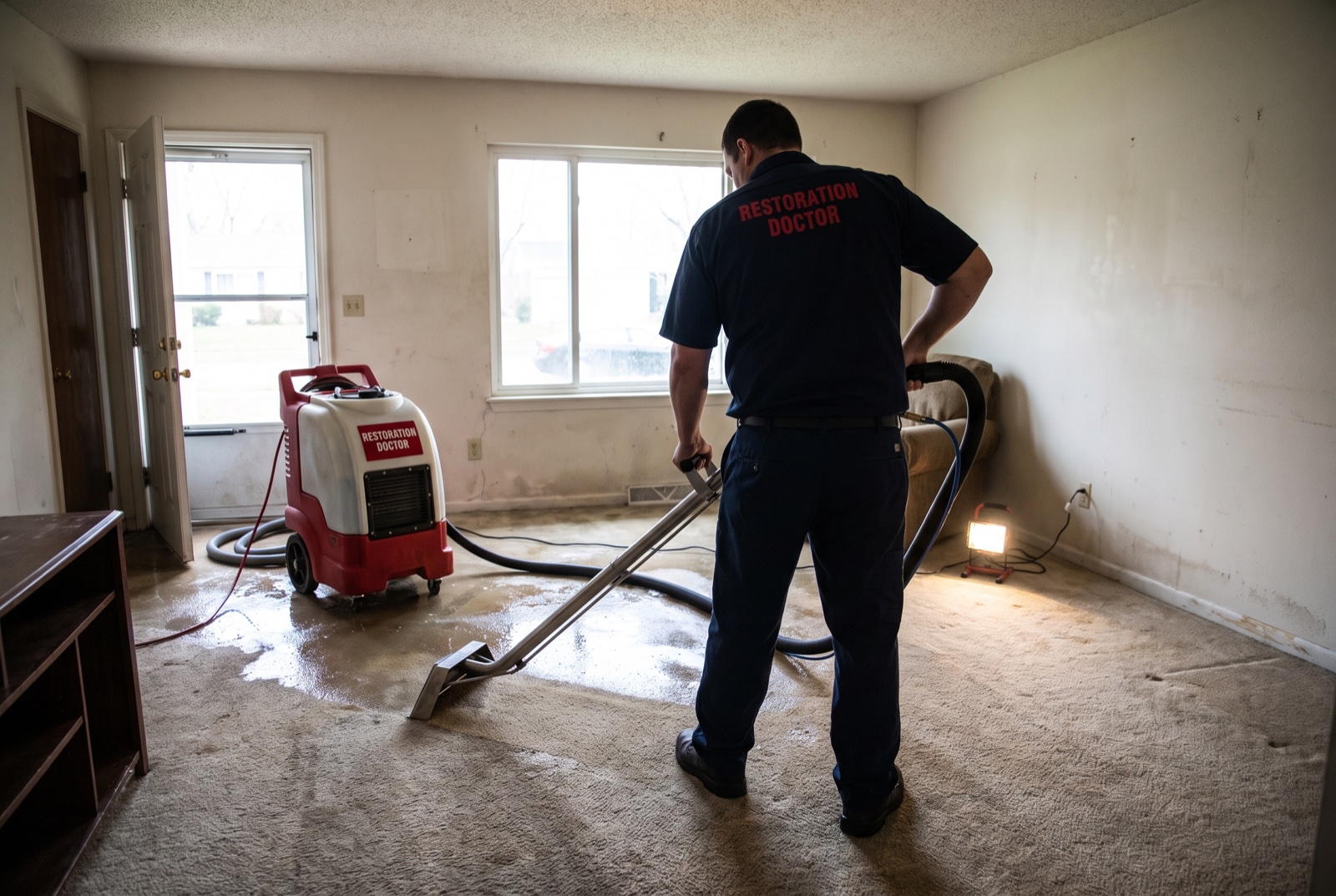
Under those conditions the industry's working window for visible microbial growth on wet cellulose materials is roughly 24 to 48 hours. Not weeks. That is why the value of a restoration crew is not in the demolition — it is in how fast the drying equipment arrives. Every hour that a wet building sits without dehumidification moves material from the 'dry it in place' column into the 'remove and replace' column, and it moves a straightforward water mitigation project toward a mold remediation project performed under containment.
It is also why 'it looks dry' is a meaningless standard here. Surfaces dry cosmetically while the material behind them stays saturated — the back of drywall, the underside of tile underlayment, the base plate against the slab, the cavity behind a cabinet run. Proper drying means moisture readings taken in the actual materials, logged daily, and driven to a defined dry standard, not to appearance.
How do I hire a restoration contractor and avoid post-storm storm-chasers?
After every significant Florida storm, out-of-state trucks fill Broward parking lots within days. Some of those crews are legitimate and welcome; the industry genuinely surges resources into disaster areas. Others take a deposit, perform partial demolition, and disappear — leaving a homeowner with an opened-up house, no drying equipment, and a compromised claim. The screening questions are simple, and any real contractor answers them without hesitation.
Verify licensing in Florida and confirm general liability and workers' compensation coverage — a crew injured on your property without workers' comp is your problem. Ask about IICRC credentials specifically: the S500 standard governs water damage restoration and the S520 standard governs mold remediation, and technicians should be certified to them. Require a written scope of work before demolition begins, describing what is being removed, what is being dried, and what equipment is being placed. Be extremely cautious with any assignment of benefits document, and never sign a blank or open-ended one — an AOB transfers your claim rights to the contractor, and Florida's history with abusive AOB practices is exactly why the law around them has been repeatedly tightened. Read anything you sign, and decline anything with blanks in it.
Be equally clear about how billing works. At Restoration Doctor, you are our customer — not your insurance company. We bill the homeowner, and in return we produce the documentation package that supports your claim: IICRC-grade photo logs, daily moisture and psychrometric readings, thermal imaging where it is warranted, and a line-item estimate you submit to your carrier for reimbursement. That structure keeps our loyalty pointed at you rather than at an adjuster, and it means the file you receive is built to be reviewed. On cost, expect ranges rather than promises: a contained single-room dry-out is typically a low-four-figure project, while a whole-floor storm loss involving contaminated water, contents handling, and remediation can run well into five figures. Every number depends on affected square footage, category of water, materials involved, equipment days, and how quickly drying started — which is one more reason speed matters.
Finally, watch the behavioral flags. Pressure to sign on the spot, a demand for a large cash deposit before any work, unwillingness to put a scope in writing, no local phone or physical presence, a promise that your claim is guaranteed to be covered, or an offer to handle your deductible — any one of those is a reason to keep looking. You can call our 24/7 dispatch line and get a straight answer about what your home needs, whether or not you hire us.
The 72-hour pre-landfall countdown for a Fort Lauderdale home
- 1
72 hours out — finish the documentation and the paperwork
Walk the entire home on video, room by room, with closets and cabinets open. Photograph serial numbers on appliances and electronics, all four exterior elevations, the roof from the ground, and any seawall or dock. Upload your homeowners and flood declarations pages, deductible amounts, and agent contacts to cloud storage.
- 2
72 hours out — fuel, cash, water, medication, and supplies
Fill vehicles and generator fuel containers, get cash while ATMs work, buy or fill drinking water for several days, refill prescriptions, and stock non-perishable food, batteries, flashlights, a weather radio, and first-aid supplies. Charge every power bank in the house.
- 3
48 hours out — close the water-entry failure points
Clear window weep holes, gutters, scuppers, and area drains. Inspect and clean slider tracks and seals. Reseal AC line and condensate penetrations if they are cracked. Confirm soffit panels are secure and brace the garage door if you have a bracing system.
- 4
48 hours out — clear the yard completely
Bring in or submerge every loose outdoor object: patio furniture, planters, grills, umbrellas, pool equipment, kayaks, trash cans, and trampolines. Anything left outside becomes a projectile that breaks a window you just protected.
- 5
24 hours out — deploy shutters and interior water protection
Install shutters or panels on every opening, including the ones you usually skip. Move porous valuables at least twelve to eighteen inches off the slab, place sandbags or water barriers at thresholds and the garage opening that have leaked before, and move vehicles out of a garage with a history of taking water.
- 6
24 hours out — stage the post-storm kit and stop hazards at the source
Set out towels, buckets, a wet-vac, tarps, plastic sheeting, and rope in an accessible interior spot. Turn off propane at the tank, shut water to any outdoor or vulnerable fixtures, and know exactly where your main water shutoff and electrical panel are.
- 7
12 hours out — protect the interior and shelter safely
Raise or cover furniture and electronics, unplug sensitive equipment to protect against surges, set the refrigerator and freezer to their coldest settings, fill bathtubs for utility water, and identify the interior room away from windows where the household will ride out the storm.
- 8
Landfall — stay put and start the record
Do not open shutters during the calm of an eye passage. If you observe an active leak or intrusion during the storm, photograph it with a timestamp from a safe position — that record is often the clearest evidence of how and where water entered.